
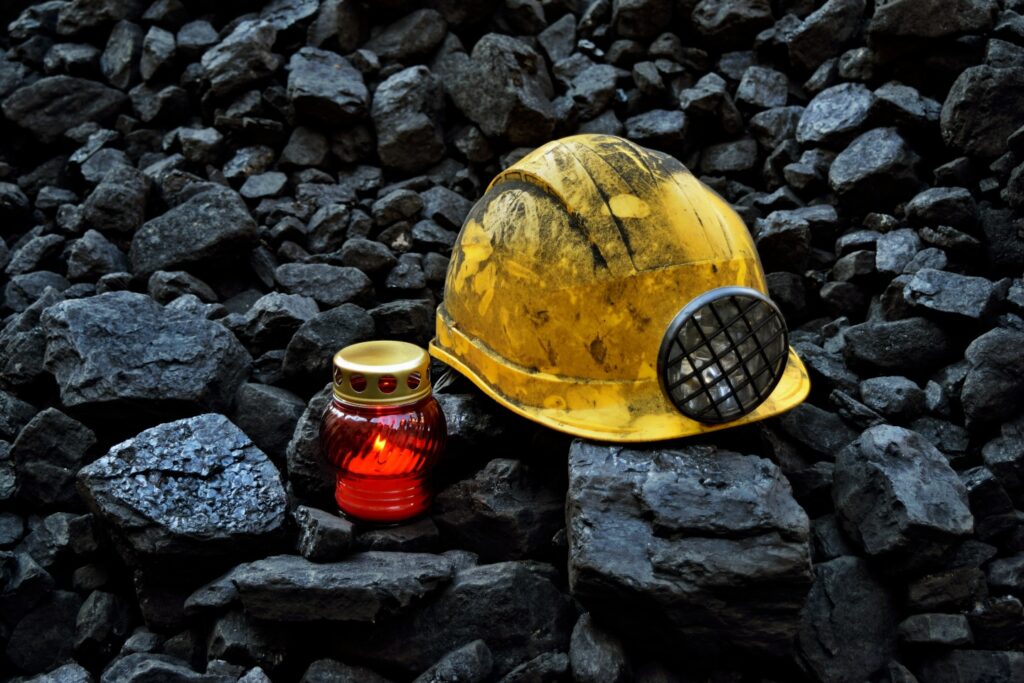
Harare –06 June 2024 – Today the Centre of Natural Resource Governance (CNRG) joins the mining community to commemorate the legacy of the Kamandama mine disaster, where 427 mine workers perished.
The memory of the brave workers lives on in the hearts of families, colleagues, and the broader industry.
On June 6, 1972, Zimbabwe’s mining industry was plunged into an abyss of tragedy. Not only the industry was blighted by a horrific accident, but families lost fathers, brothers, and sons in what is still regarded as the deadliest mine accident in Zimbabwe.
427 mine workers at Kamandama lost their lives at the Wankie Number 2 mine when gas explosions ripped the tunnels they were working in. Methane gas was suspected to have caused the explosion.
To date, mine accidents continue to be a scourge in the murky but lucrative mining sector with statistics showing that accidents in Zimbabwe’s extractive sector killed at least 237 people in 2023, making it one of the worst years in the country’s mining history.
According to the Chamber of Mines 2023 survey, 80% of the mine fatalities were underground.
Already the year 2024 began on a bad note when at least 15 miners were trapped underground at Redwing Mine, with insignificant government help the miners rescued themselves from below the surface where safety protocols when carrying out mining operations are scant.
The first two months of 2024 saw a total of 37 incidents recorded and these resulted in 33 fatalities and 27 serious injuries, further underlining the need for risk management in the mining sector.
Lack of critical equipment maintenance, poor structural integrity inspections, and human errors like safety protocol violations were identified as contributing factors. This underscores the need for stronger compliance, monitoring, and worker training.
Occupational health and safety (OHS) challenges are also prevalent, with mining accidents and injuries, occupational hazards, and environmental pollution being major concerns in the mining sector due to the proliferation of gold mining.
Artisanal and Small-scale Gold Mining (ASGM) is characterized by a high prevalence of injuries and fatalities due to numerous hazards and a lack of safety standards which heighten the risks associated with mine collapses and accidents.
To curb the recurrence of mining accidents CNRG calls for the tightening of regulations and inspection and structured decommissioning of mines to dissuade artisanal miners from reopening dangerous disused shafts.
We believe that engraining safety in a mine’s culture and operations can be a success towards the zero harm initiatives in most mines through collaborative efforts. For a country that has the mining industry as a key sector, protecting the industry’s workforce by preventing hidden dangers should be the overarching goal.
We advocate for the following steps and procedures as key deterrent measures that should be adopted:
- Rigorous audits and stiffer penalties must be a daily dose to deter negligence. This will encourage mining companies to be proactive in preventing accidents.
- Regular mine inspections and maintenance which are crucial to red flag any developing issues or potential hazard triggers before tragedy strikes.
- Robust policies, consistent training, and awareness campaigns targeted at ASGM hotspots across the country.
- Strict enforcement of safety protocols, and emergency response plans for mining companies should be a demonstrable effort on the value placed on occupational safety.
- Investment should be made in personal protective equipment (PPE) inclusive of gas monitors, emergency exits, fire suppression, and other safeguards.
The ghost of Kamandama can only be fully exorcised through an integrated approach that puts worker safety, strict enforcement of protocols, and emergency response plans at the forefront of the mining industry.
For more details, please contact.
Centre for Natural Resource Governance
CNRG Information Department,
Emailinfo@cnrgzim.org
Cell +263 779 078 873
Twitter: @CNRG_ZIM
Facebook:https://www.facebook.com/cnrgzim
Website:https://cnrgzim.org/