
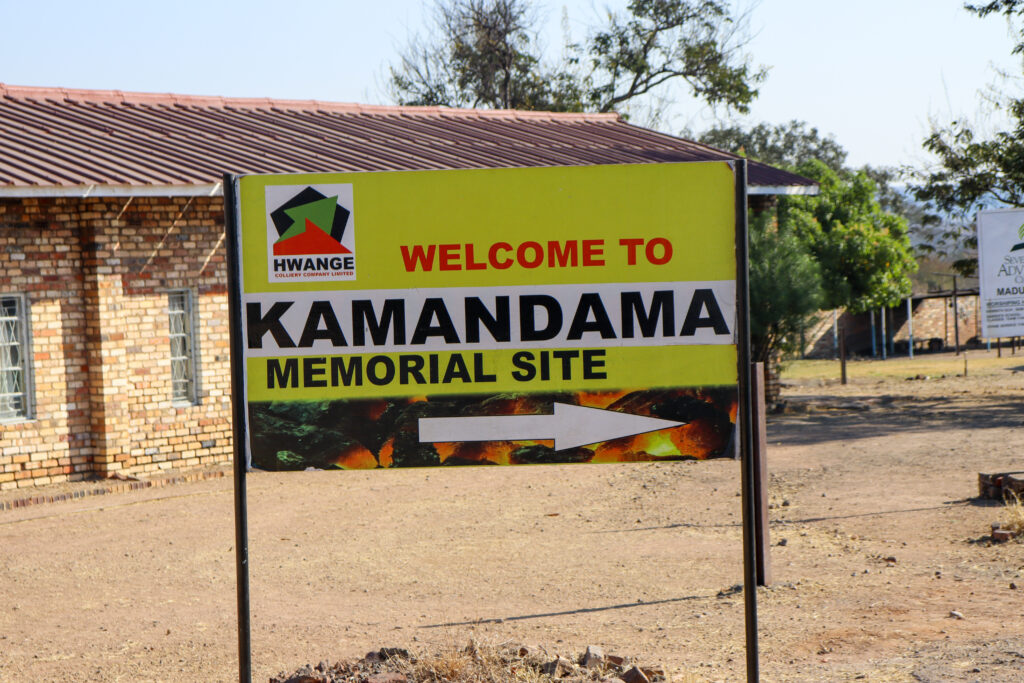
By Ndaizivei Garura
On June 6, 1972, Zimbabwe’s mining industry was plunged into an abyss of tragedy. Not only the industry was blighted by a horrific accident, but families lost fathers, brothers and sons in what is still regarded as the deadliest mine accident in Zimbabwe.
Over 400 mine workers at Kamandama lost their lives at the Wankie number 2 mine when gas explosions ripped the tunnels they were working in. Methane gas was suspected to have caused the explosion.
The tragedy was a defining moment for occupational health and safety in the mining sector, even today it still underpins issues to do with safety in the mining sector on the eve of its 52nd anniversary this year.
To this day, the Kamandama disaster remains a somber reminder of the human cost of lax safety practices in Zimbabwe’s mining sector and the struggles workers still face amid unsafe working conditions.
The Kamandama workers deserve to be remembered 52 years later, and their memories should live on whilst special attention will continue to be focused on the value of safety for today’s mine workers.
As miners work tirelessly every day excavating the resources that the Zimbabwean economy heavily depends on, they risk dangerous conditions that could severely impact their health and wellbeing. Global development and trends also mean that workers contribute to the value chain of technological development now as local minerals are powering the energy transition.
While extracting metals and minerals that are strategic and critical to the country and beyond, prioritizing their safety should be a top concern for mining companies and the government. Underground accidents have devastating consequences for workers and their families. Injuries on the job often lead to long-term health problems which are irreversible.
It is disheartening that 52 years since the Kamandama accident, in a world with modern technologies and advanced knowledge systems, Zimbabwe still faces occupational hazards for mine workers.
According to the Chamber of Mines 2023 survey, 80% of the mine fatalities were underground. Lack of critical equipment maintenance, poor structural integrity inspections, and human errors like safety protocol violations were identified as contributing factors. This underscores the need for stronger compliance, monitoring, and worker training.
Zimbabwe is festering with illegal miners, locals using rudimentary excavation tools, who do not value safety and therefore are not willing to invest in machinery, skills, and compliance to guarantee the total safety of the mine workers.
Some argue that safety costs cut into profits, but protecting people should come before profits. Workers are valuable assets with specialized skills, if anything, a high turnover due to accidents is inefficient.
Inversely some mining companies overload workers with production pressures which increases the risk of accidents, when adhering to safety practices at the workplace cultivates loyalty, trust, and productivity too. Safety starts in the mind and giving workers that peace of mind will form part of the preventative measures.
Regulatory bodies such as the Environmental Management Agency, National Social Services Authority, and Ministry of Mines and Mining Development inspectorate must prioritize protecting mineworkers to curb the unnecessary loss of lives.
Rigorous audits and stiffer penalties must be a daily dose to deter negligence. This will encourage mining companies to be proactive in preventing accidents. Regular mine inspections and maintenance are crucial to red flag any developing issue or potential hazard trigger before tragedy strikes.
Robust policies, consistent training, strict enforcement of protocols, and emergency response plans are a must for any mining entity to demonstrate how much they value occupational safety. Personal protective equipment saves lives, as do gas monitors, emergency exits, fire suppression, and other safeguards.
Engraining safety in a mine’s culture and operations will be a success towards the zero harm initiatives in most mines. For a country that has the mining industry as a key sector, protecting the industry’s workforce by preventing hidden dangers should be the overarching goal.
The ghost of Kamandama can only be fully exorcised through an integrated approach that puts worker safety, strict enforcement of protocols, and emergency response plans on the forefront of the mining industry.