
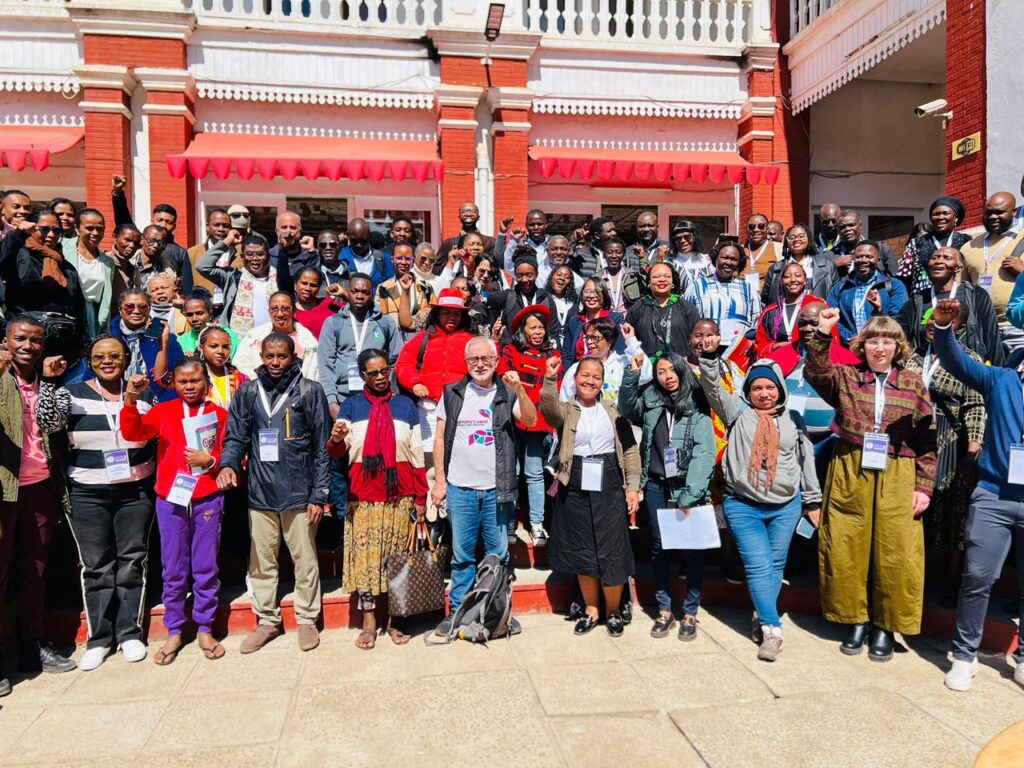
By Donald Nyarota
When Southern Africa’s presidents gathered in Antananarivo this August, their agenda hummed with the buzzwords of the moment: industrialization, agricultural transformation, and energy transition. The promise of a more resilient, self-reliant region. However, a few hours away in Antsirabe, a different narrative unfolded. Here, farmers, workers, women’s groups, and activists from across the Southern African Development Community (SADC) denounced the official script as little more than green-washed colonialism.
For three days, the People’s Summit, an annual counter-forum hosted this year in Madagascar, heard testimony of debt burdens, extractive projects, and climate catastrophes battering the region. Its communique warns that SADC governments, in their rush to industrialize and to woo foreign investors, are doubling down on the very economic model that has entrenched inequality, ecological collapse, and dependence on outside powers.
The People’s Summit ran under the theme, “Decolonizing our Future: Reclaiming People’s Power and Sovereignty, Defending Human Rights and the Rights of Nature, Advancing People-centered and Sustainable Transformation of Economic Systems and Regional Integration in the SADC.”
At the heart of the critique is the climate crisis, which the delegates insisted could not be treated as a stand-alone problem. Cyclones, droughts, and floods that have devastated Mozambique, Malawi, and Madagascar are not accidents of nature, they argue, but the predictable consequences of centuries of resource plunder and an economic order tilted toward the Global North.
“Climate justice is inseparable from economic justice,” the people’s communique declares, pointing to the exploitation of land, water, and forests to feed international markets while local communities shoulder the losses.
The People’s Summit views the rush for critical minerals, which are richly abundant in Africa, such as cobalt, lithium, and rare earths, as particularly dangerous. In the name of the green energy transition, African soil is once again being stripped to fuel industrial revolutions elsewhere. Delegates called this a new “scramble for Africa”: a form of green colonialism where electrification in Europe and North America rests on displacement, militarization, and polluted rivers in Zimbabwe, the Democratic Republic of Congo, and Mozambique.
The clash is stark. SADC governments pitch their transition plans as pragmatic: mining revenues can fund infrastructure; carbon markets can bring investment. But activists counter that resilience built on debt and extractivism is brittle. People’s demands centered on debt cancellation, climate reparations, and financing through unconditional grants, not loans. They demanded a halt to new fossil fuel projects, recognition of the rights of nature, and investment in agro-ecology rather than industrial farming.
There is also a feminist current. Women, who form the majority of smallholder farmers and are often the first to feel the effects of climate shocks want leadership roles, access to land and markets, and state recognition of unpaid care work. Civic society activists across continent, see the region’s economic model as patriarchal as well as exploitative.
“On climate change, we demand feminist and just climate financing that prioritizes community-led adaptation, loss and damage, and resilient public infrastructure. An immediate moratorium on new fossil fuel projects and redirection of investment toward a just, low-carbon industrialization strategy,” states part of the communique.
The message to SADC leaders is blunt: true sovereignty cannot be built on IMF austerity packages, elite accumulation, or predatory trade deals. Instead, people’s movements are calling for a low-carbon, people-centered integration that prioritizes ecological sovereignty, redistributive justice, and solidarity over corporate profit.
Whether presidents in Antananarivo heeded the call is doubtful. Past summits have been long on declarations, short on transformation. Yet the mood in Antsirabe suggested that people’s movements are not waiting for permission. They are already building cross-border campaigns, strengthening alliances, and articulating alternatives.
For Southern Africa, the choice is increasingly clear: remain a supplier of raw materials for other nations’ clean-energy transitions or chart a path that is genuinely just, ecological, and sovereign.