
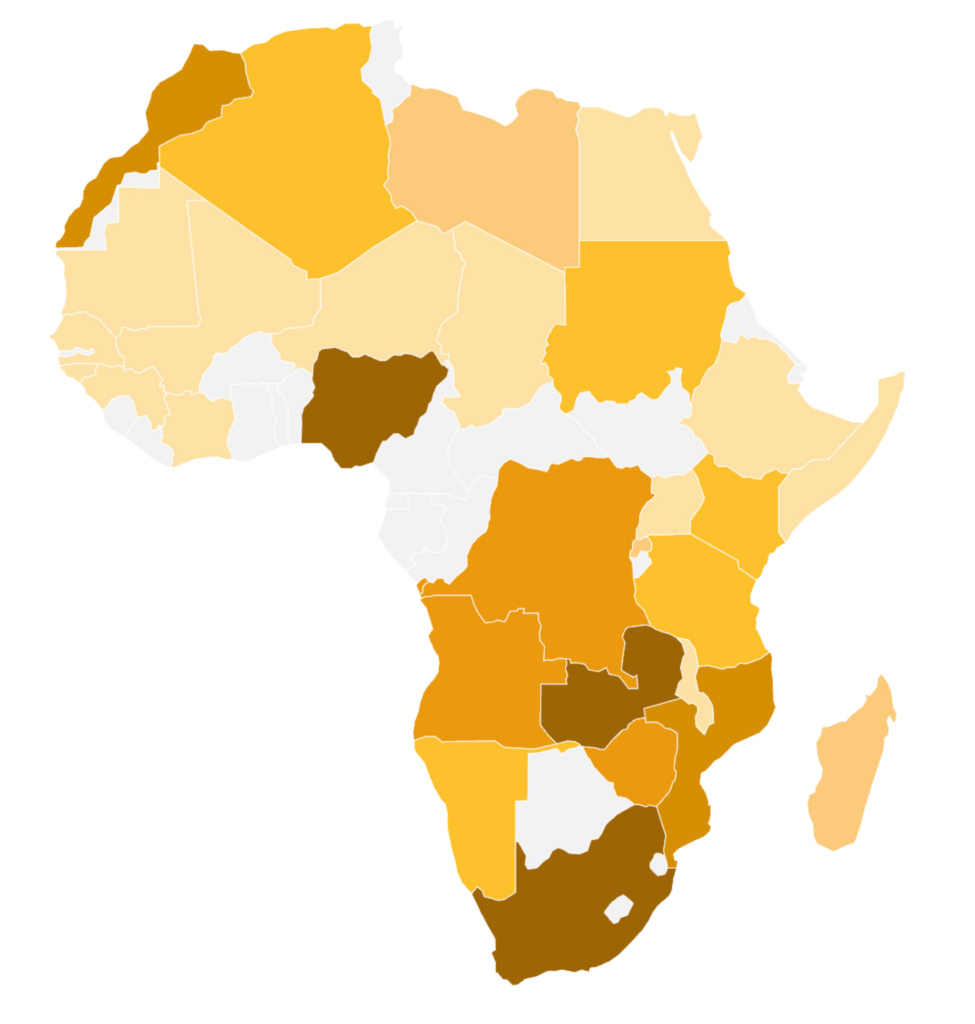
A new wave of resource diplomacy is quietly yet profoundly shaping the future of critical minerals amidst an intensifying global competition for strategic minerals.
By Donald Nyarota
In the global rush to secure supplies of the minerals needed for the green transition, Africa has become the focus of intense competition. Countries rich in lithium, cobalt, and rare earth elements—key components for electric vehicle batteries, wind turbines, and digital technologies—are signing agreements with global powers eager to lock in access.
A report by the Africa Policy Research Institute (APRI) maps nearly 100 such agreements and highlights a stark reality: while these deals are crucial for securing critical minerals, they are often opaque, non-binding, and driven by geopolitical concerns as much as economic interests.
The report, Mapping Africa’s Green Mineral Partnerships, examines agreements between African states and twelve key actors, including China, the United States, the European Union, India, and Russia.
It finds that while traditional mining powers like Australia and Canada play a surprisingly minor role, China and Russia have been far more aggressive in securing access. Some deals involve direct government-to-government cooperation, while others focus on encouraging private-sector investment. The terms vary widely—some emphasize environmental and social standards, while others make little mention of them.
The push to control critical minerals has become a matter of national security.
“Countries are increasingly viewing their critical mineral supply chains not just in terms of global competitiveness or even global responsibility to decarbonise, but as an issue affecting national security. The urgency with which critical minerals are pursued raises important questions about how it will affect Africa’s agency in governing the extraction of these resources in the future,” reads part of the report.
Disruptions to supply chains during the COVID-19 pandemic exposed how vulnerable many countries are to reliance on a few major processing hubs—particularly China, which dominates global refining capacity. The U.S. and EU have responded with policies aimed at reducing dependence, seeking to secure more direct access to raw materials and refining facilities in Africa.
For African states, this creates both opportunities and risks. Some governments see the competition as a chance to negotiate better terms, pushing for local processing and greater value addition. Others worry that the geopolitical rush could leave them with agreements that primarily serve foreign interests rather than national development goals.
The geopolitical attention is intense with the International Renewable Energy Agency, 2023 recording that ‘between 2019 and 2023, 43 national critical minerals strategies on critical minerals were adopted worldwide.’
As Africa emerges as a critical hub in the global quest for strategic resources, nations such as Zimbabwe play a pivotal role, in this new era of resource diplomacy redefining the continent’s position in the international mineral landscape.
According to the report, Zimbabwe has established mineral partnerships with several global actors, including Russia, India, China, and Saudi Arabia. These partnerships focus on various aspects such as technical cooperation, geological exploration, investment promotion, and capacity building.
These partnerships aim to enhance Zimbabwe’s mineral sector through investment, knowledge exchange, and technical cooperation, contributing to the country’s economic development and integration into global mineral supply chains.
The transparency problem
One of the most pressing concerns, tackled in the APRI report, is the lack of public access to many of these agreements. Few African governments publish full details, making it difficult to assess the true economic and social implications. This opacity weakens public scrutiny, limits the ability to compare deals across countries, and increases the risk of exploitative arrangements.
“The urgency with which critical minerals are pursued raises important questions about how it will affect Africa’s agency in governing the extraction of these resources,” the report notes. Without greater transparency, African states may struggle to fully benefit from the green mineral boom.
As demand for critical minerals grows, Africa’s role in the global economy is shifting. Whether the continent can leverage its resource wealth into long-term economic gains, rather than simply supplying raw materials to foreign powers, remains an open question. For now, the battle for Africa’s minerals continues—with far-reaching implications for the global energy transition