

By Staff Reporter
The Zimbabwe Consolidated Diamond Company (ZCDC) has come under fire from labour groups following the retrenchment of 294 workers, with credible indications that the number of affected employees could rise to 600 in the coming weeks. The move, which disproportionately affects low-grade and contract workers, has triggered a backlash from the Zimbabwe Diamond and Allied Minerals Workers Union (ZDAMWU), which issued a strongly worded press statement condemning the process as unfair, opaque, and procedurally flawed.
In its July 3 statement, ZDAMWU expressed “deep disappointment and concern” over how the layoffs were handled. The union accused ZCDC of failing to adhere to the legal requirements of the Labour Act and the industry’s Collective Bargaining Agreement (CBA). Most concerning, the union said, was the apparent targeting of vulnerable workers, on short-term contracts and in lower-tier job grades, without proper consultation, fair selection criteria, or adequate notice.
“The current retrenchment exercise threatens the fundamental right to job security and undermines workers’ dignity and livelihoods,” said ZDAMWU General Secretary Justice Chinhema. “We demand that ZCDC halt the current retrenchment process and engage in genuine, transparent consultations with all stakeholders.”
The dismissed workers were reportedly offered gratuity packages, which the union has advised them not to accept until proper legal and procedural channels have been exhausted. “Many of these workers are not unionised and are being coerced into accepting deals they don’t fully understand,” said Chinhema. “We are urging all affected employees to seek advice and representation before signing anything.”
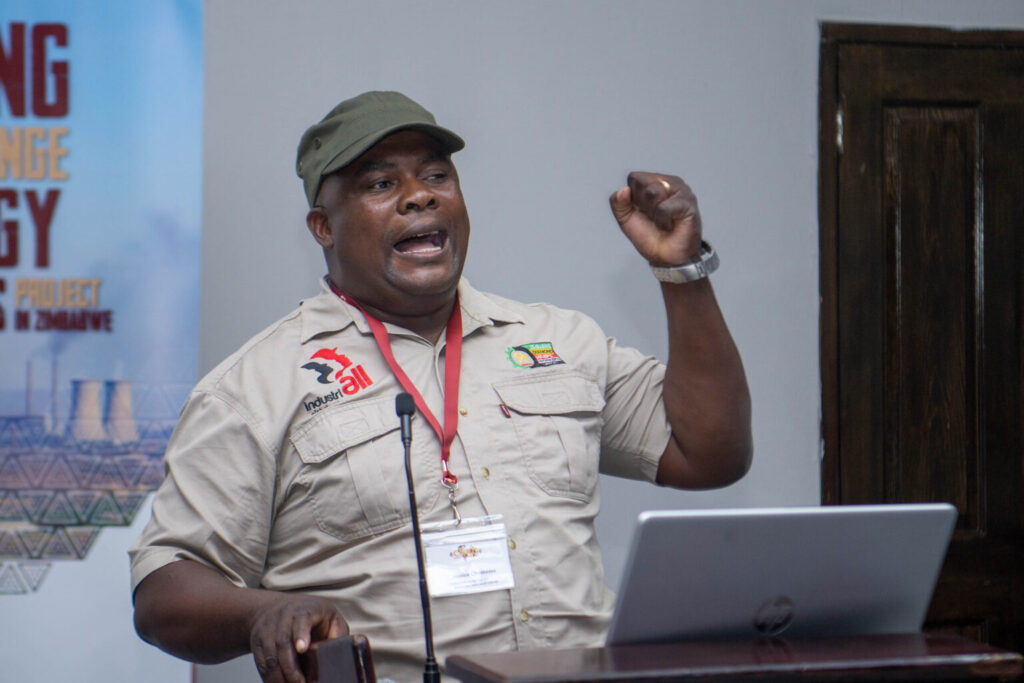
ZDAMWU general secretary Justice Chinhema
According to its 2022 brochure, the Zimbabwe Consolidated Diamond Company (ZCDC) has a total workforce of approximately 1,622 employees. This comprises around 1,000 permanent staff members, supplemented by additional contract workers. The firm is facing significant viability issues, characterized by operational challenges, financial difficulties, and questions of accountability and governance. These issues have included the inability to account for large sums of money and diamond stock, non-payment of salaries to workers, and a history of operational disruptions.
Pattern of Targeting the Precarious
According to sources familiar with the retrenchment, low union representation among contract workers left many especially vulnerable. These employees, often engaged on six-month or annual contracts with minimal benefits, had little knowledge of their rights or protections under the law.
One former worker, who declined to be named, said, “It’s bloodbath workers were caught unawares we were simply told our contracts were not being renewed. No explanation, no warning, just a letter and an offer to sign. Those who asked questions were threatened with being blacklisted from future re-employment.”
The unfolding situation has again raised alarm over the increasing casualisation of labour in Zimbabwe’s mining sector. Industry observers point out that while diamond mining remains a high-revenue operation, most of its workforce is relegated to precarious conditions with weak job security and limited access to organised labour protections.
ZDAMWU’s Call for Unity and Legal Redress
ZDAMWU has seized the moment to call for a stronger collective organisation among workers. “This situation underscores the critical importance of unity through strong union representation,” read the statement. “A unified workforce has a powerful voice to resist unfair dismissals and ensure employers uphold their legal and moral obligations.”
The union says it is preparing to pursue legal and collective action to defend the rights of the laid-off workers and is urging the Ministry of Labour and Social Welfare to intervene. It is also calling for an independent audit of the retrenchment process to ensure compliance with Zimbabwe’s labour laws and collective bargaining frameworks.
The ZCDC has not responded publicly to the allegations and attempts to reach company officials for comment were unsuccessful at the time of publication.
As Zimbabwe grapples with economic challenges and the pressures of restructuring state-owned enterprises, labour advocates warn that retrenched workers cannot be treated as collateral damage. “Families, communities, and livelihoods are being thrown into disarray. This is not just about numbers – it’s about people,” Chinhema said.
As fears mount that the layoffs could balloon to as many as 600 workers, ZDAMWU is urging all affected employees to stand together, refuse rushed gratuity offers, and demand fairness and dignity. The union’s firm stance signals an intensifying labour battle at one of Zimbabwe’s most strategic mining entities.
For now, retrenched workers face an uncertain future, but with growing union mobilisation, the fight for their rights is just beginning.