

“This solution may seem radical but to guard against energy colonialism there is a need to nationalize transitional mineral with policies like the scrapped indigenization policy,” said Dr. Kennedy Manduna of the University of Witwatersrand.
His sentiments offered with a caveat, addressed delegates at an Africa Transitional Minerals International conference as a solution to buffer global south producer nations from negative economic and financial impacts of foreign investment in critical minerals.
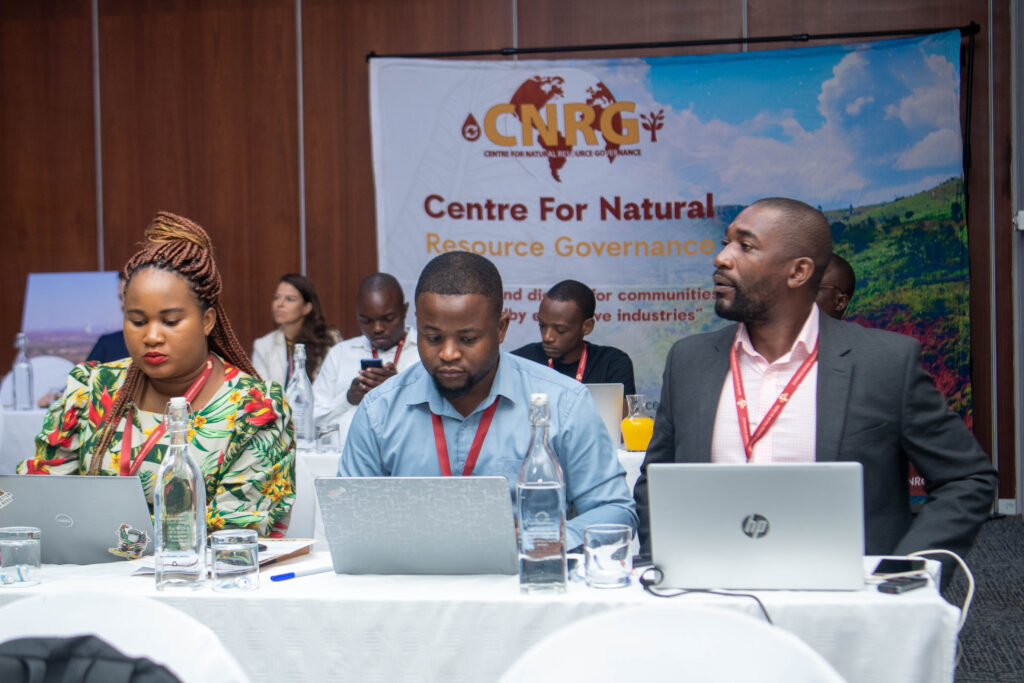
The conference was organised by the Centre for Natural Resource Governance Zimbabwe (CNRG) a leading research and advocacy civil society organization fighting to promote better governance of natural resources and equity for poor communities.
The Transitional Minerals conference was convened to deliberate ways in which Africa can utilize its abundance of critical minerals reserves to harness their potential for industrialization and transition to green energy.
Dr Manduna argued that the current beneficial ownership of the mining investments reveals a disparity that exposes African states to manipulative relationships, particularly from mega Chinese investments in the transitional minerals sector.
The scrapping out of the contentious Indigenisation policy, which limited foreign ownership thresholds to 49%, could have been a protective buffer instead of merely attracting investment at the expense of ownership by the global south producer countries contend Dr Manduna.
“Lithium-producing countries are colonial peripheries or subaltern communities with China now emerging as the imperial power of the transition to renewable energy.
“Chinese investments are fuelling mining-induced war on nature, through non-compliance to legal frameworks on environment and mining resulting in water pollution, artificial hills of mine dumps and adverse environmental impacts,” he said.
Stressing the need for sustainable mining Dr Manduna says the government should set up responsive policies to increase accountability, transparency, and enforcement of ESG.
He said lithium mineral processing is a highly energy-intensive process demanding secure energy supplies for sustainable industrial integration of the lithium supply chain.
“There is, therefore, a need to emphasize value addition and downstream industries development through protective nationalization policies which can further enhance and consolidate the country’s position in the global lithium market,” he said.
Professor Patrick Bond director of the Centre for Social Change University of Johannesburg, South Africa, states that the current extraction regime is exploitative and leads to natural wealth depletion in the Global South.
Zimbabwe’s declining wealth in the form of rapid minerals depletion and widespread resource looting are caustic given a high dependence on natural capital calls for sustainable economic development says Professor Bond.
“There is a need for sustainable development which is development that meets the needs of the present without compromising the ability of future generations to meet their own needs. those that progress most successfully manage their assets for the long term and reinvest in human and social capital as well as in building strong institutions and systems of governance,” he said.
European Union (EU) is restructuring industries into renewable energy adoption, while driving away from dependency on China through resource nationalism, in a defining geopolitical struggle that currently denotes the transition to green energy.
EU has adopted strategies to ramp up the production of transitional minerals within the bloc and enforce legislation that makes it difficult to mine in that jurisdiction given the impact of mining to focus on recycling.
Farai Maguwu, CNRG executive director also warned against the deepening inequality from transitional minerals extraction at a time when African states’ capacity to phase out fossil fuel dependency is still limited.
African industries, including the mining sector, have limited transition capacity evidenced by continued investment in fossil fuel powered lithium concentration plans to drive and power extraction of transitional minerals beneficiation said Maguwu.
“This could be a case of exacerbating problems at the local level to address a global problem,” said Maguwu.
Divestment from fossil fuels in the Global South poses systemic challenges as increased investment in energy intensive transitional mineral extraction is powered by fossil fuel powered technologies, he said.
“There is a need for a win-win model through the establishment of a national master plan to ensure value linkages, emulating sustainable extraction models to stop mining from being an enclave economy.
“African states need to diversify strategic partnerships with consumer countries to drive the value of not just of minerals, but to upscale skills and technology transfer to set up value addition processing plants and standardised compensation models for labor,” said Maguwu.
Currently, legislation coming into force like the EU Raw Materials Act focuses on mutual interests and benefits, aligned interests with the introduction of tools that can prioritise strategic projects- preferential rates for funding other projects in partner countries.
It will also provide increased support for infrastructure logistics and cooperation in technology transfer and engagement on a broader level with the production and consuming countries that are resource-rich to facilitate international cooperation.
EU is driving integration into its supply chain of resource rich countries while consolidating localised exploitation of critical transitional minerals, with arrangements that ensure the involvement of the bloc with mutually beneficial partners.
By 2025 there is a projected increase in global production of lithium, with Zimbabwe’s reserves able to cover the global demand for the mineral. China has invested 1.4 billion in Zimbabwe to acquire lithium mining companies with over 160 applications for mining licenses in the country.
Zimbabwe has the potential to become a significant player in the global lithium market. In 2018, Zimbabwe and Namibia were among the top ten lithium producers worldwide. Zimbabwe is expected to be able to meet 20% of total global demand in the coming years.
With estimated lithium deposits of over 23 million metric tons, Zimbabwe is home to Africa’s largest lithium reserves, which are also the sixth largest lithium reserves in the world.