
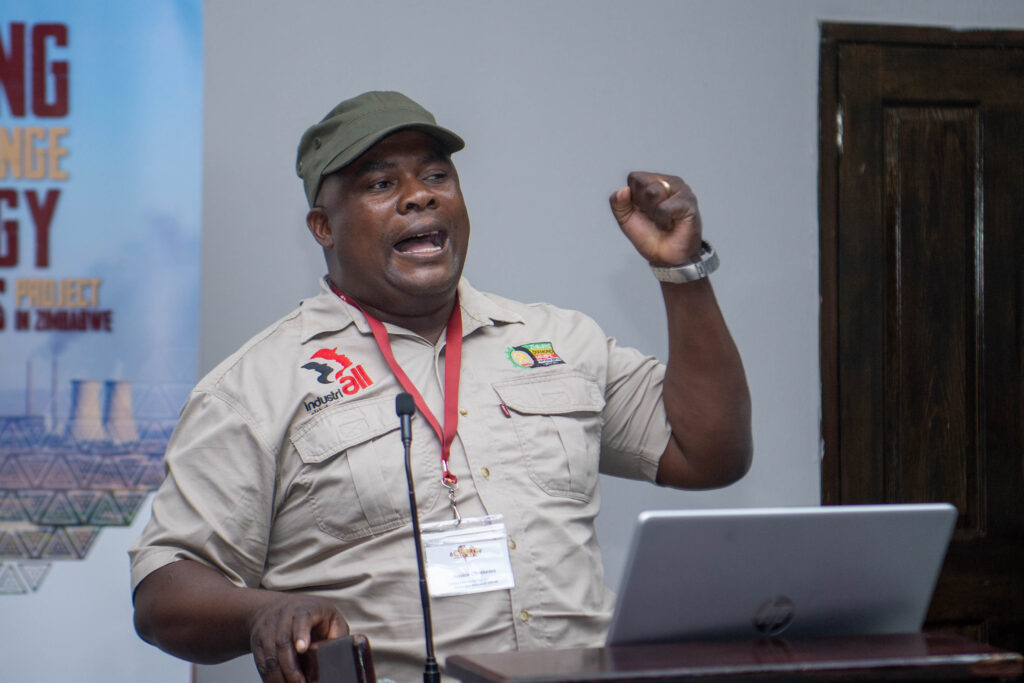
Workers’ union representatives in the mining sector bemoan deteriorating labor standards in lithium extraction as evidence of the exclusionary impacts of the green energy transition.
Citing cases of ‘rampant casualization of labor’ trade unionists welcomed involvement in inclusive discussions, proffered by an International Transitional Minerals conference, where labour shared responsibility to confront industry challenges.
The multistakeholder conference organised by the Centre for Natural Resource Governance (CNRG) explored opportunities for mineral-led development in Africa through shared business models for producer countries.
As global demand for lithium soars amid the energy transition drive, strategic minerals have created a lot of job opportunities locally largely driven by massive Chinese investment in the sector.
Zimbabwe Diamond and Allied Workers Union (ZDAMWU) secretary general Justice Chinhema however raised red flags over precarious working conditions and a total disregard for health and safety issues in the lithium.
He said close to five thousand employees are currently working in the established lithium mining companies in Zimbabwe under constrained labour conditions in a ‘wave of colonization cheap labour and violations of human rights.’
“Chinese investors do not respect the labor rights in the sector, we need to have routine visits in their mining sites given their history of labor violations. The jobs brought by these investments are not linked to any standards, but to self-created cheap and free labor and sometimes supported by our governments.
“The current situation in the lithium sector is so sad, if not addressed urgently we are facing another wave of colonisation slavery, and cheap and free labour,” said Chinhema.
“As labor and as a trade union, we advocate for systems that balance the power between capital and labor through approaches that guarantee the improvement, promotion, and protection of workers’ rights and interests characterized by economic equality, good governance, and justice for all in society.”
Additionally, Chinese-backed mining companies are offering employees short-term fixed contracts while terminating black indigenous company subcontracting in preference for Sino firms linked to parent mining companies for rudimentary services.
ZDAMWU says sidelining locally owned companies in the provision of basic services including stone crushing and compacting is a drawback on opportunities for local value addition and beneficiation.
“One thing about subcontracting, is that the Chinese are bringing in fellow companies they are terminating the contract of black indigenous companies and awarding subcontracts to companies linked to the mother companies in China,” said Chinhema.
Unequal job opportunities in the mining sector, male dominance, and sexual exploitation, there is a need to interrogate how the extraction of transitional minerals impacts labor practices. Companies operate without investment in the health and social infrastructures of the community.
Centre for Natural Resource Governance (CNRG) shares the misgivings of labor noting deepening inequalities of the Zimbabwean driven largely by a weak legal framework and preferential investment model.
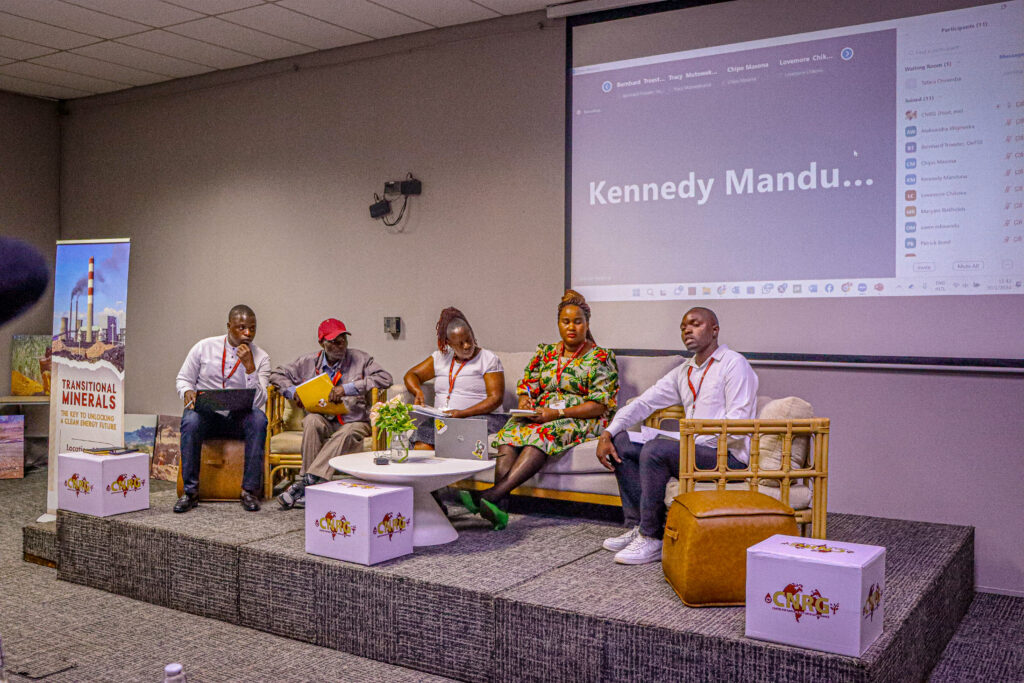
Tracy Mutowekuziva, CNRG deputy programs director says labor challenges in the sector are not limited to formally employed workers but extend to reports of child labor and exploitation of women in the lithium sector.
“There have been reports of forced labor, child labor, and exploitation of vulnerable populations, further exacerbating the suffering of these communities.
“Our role as a civic organization is to engage with government institutions, policymakers, and industry stakeholders to advocate for policy reforms that promote transparency, accountability, and community participation in natural resource management,” said Mutowekuziva.
Inversely extractive laws, policies and systems are leading to unequal job opportunities between men and women and unfair labour practices, at a time when Zimbabwe should be leveraging critical minerals to drive sustainable development.
Trade unionists called for sweeping reforms including profit-sharing models, community share ownership for community and economic development, value addition, beneficiation of minerals, and an end to corruption in the mining industry.
Notable players in the lithium sector are Bikita Minerals (Sino Mining) which has 5 sub-contracted companies, Prospect Lithium Zimbabwe, Max Mind Mining (Sabi Star Mine), Zulu Lithium Mine, Kamativi Lithium Mine, Gwanda Lithium Mine, Sandawana Mine.