
By Lameck Makula
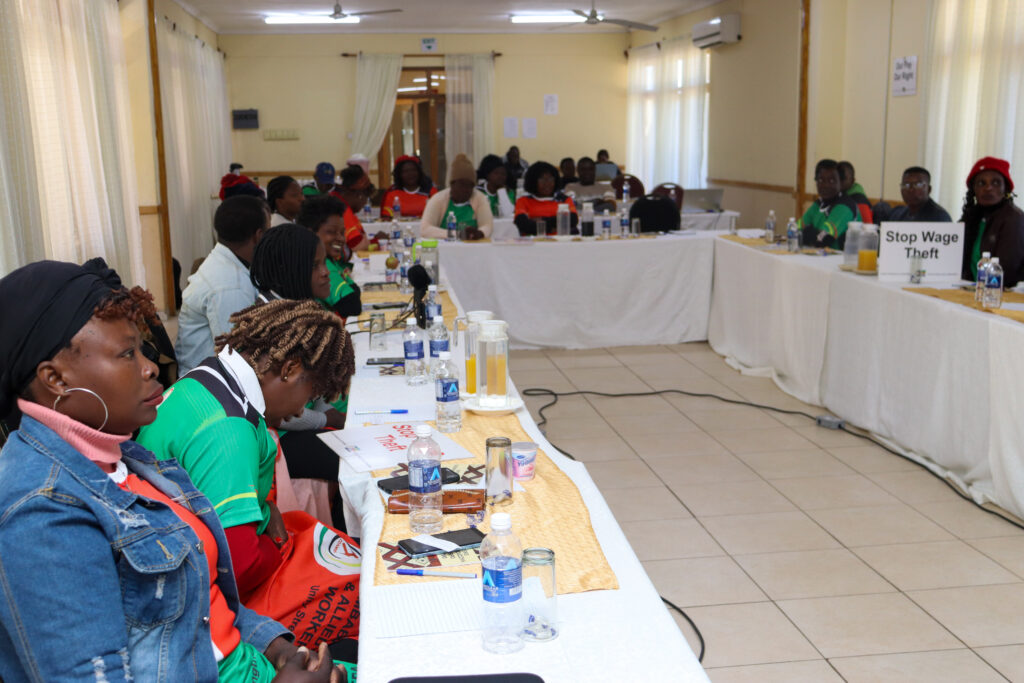
Centre for Natural Resource Governance (CNRG), in collaboration with the Zimbabwe Diamond and Allied Mine Workers Union (ZDAMWU), recently hosted female mine workers from across Zimbabwe.
The meeting was a two-day Civic Capacity Building and training workshop on labor rights and how to combat gender-based violence in the workplace.
It was held on August 3 and 4 in Mutare.
The meeting was held after it was discovered that the plight of female mine workers in Zimbabwe is an issue that is often overlooked and yet deserves urgent attention and redress. Because of the nature of the profession and patriarchal factors, the mining sector is dominated by men. As a result, women have an inferiority complex, making it harder for them to assume positions of responsibility.
The program attracted female participants from mining companies including Murowa Diamonds, Horn Mine, Sabi Mine, Cam and Motor Mine, Hwange Colliery, South Mine, Ngezi Platinum, Bikita Minerals, Dorowa Minerals, Samrace Vermiculite, Blanket Mine and Anjin Diamond, with the goal of educating and empowering women in the mining industry on labor rights, as well as encouraging sustainable, inclusive, and equitable economic growth.
Speaking at the workshop Dorcas Norupiri National Youth Coordinator for ZDAMU also highlighted several challenges faced by female mine workers in Zimbabwe including Gender inequality, sighting discrimination and unequal treatment in terms of pay, promotional opportunities, and access to decision-making roles.
“Women have often been overlooked for higher-paying jobs and are limited to low-skilled, low-paying positions. This has created limited job opportunities for women. Many mining companies prioritize male workers, particularly in underground mining, due to perceptions of physical strength. As ZDAMWU this is one of our fights to see equality in the sector”, said Norupiri.
Under the Strengthening Extractive and Natural Resources Sector Transparency and Accountability through Citizen Action and Parliamentary Oversight in Zimbabwe (STACAP) project, CNRG continues to connect workers’ and communities’ struggles for fair labor compensation, an end to sexual harassment at work, and resource depletion. For demanding rights and accountability at the workplace, the joint power of organized labor and civil society is critical.
The training uncovered a variety of issues that female mining workers face in their separate workplaces.
Sexual harassment was cited as a big problem where females are harassed by superiors. Female students on attachment were the biggest victims due to their financial vulnerability and the risk of being failed by their superiors.
This stems from a background of short contracts in which superiors seek sexual favours in order to issue long contracts. Murowa, Blanket Mine, and Zimplats were among the companies mentioned.
The training also focused on equipping women on how to resist and report sexual harassment in the workplace.
Women working in mines continue to face numerous structural challenges and are often subjected to harsh working conditions, discrimination, and abuse.
Women are underrepresented in leadership positions in the mining industry, with men holding the bulk of senior and top jobs while women are assigned cleaning and cooking duties. This limits their ability to actively participate in decision-making processes and influence policies that impact their working conditions and general well-being.
Female workers asserted that the training was informative because they were unaware of the work-related regulations and rights that were being violated by their employers, as well as the reporting processes. They were pleased about the knowledge and skills they had gained, as well as the possible impact they may have in advocating for better policies and regulations that guarantee the safety and protection of women. Many of the employees stated their eagerness to take action to bring sexual harassment abusers to justice.
Short-term contracts, a lack of bathroom facilities that are sensitive to gender, and the need for personal protective equipment (PPE) are some of the problems that female miners continue to encounter in the mining industry.
CNRG and ZDAMWU vowed to continue collaborating in research, capacity building and advocacy till the rights of women in the workplace were secured.