This 36th edition of The Weekly arrives at a moment when the relationship between development, environmental protection and human well-being demands more honest attention. The stories gathered here may come from different communities and sectors, but they speak to one shared concern: progress cannot be meaningful when the people most affected are left exposed, unheard or unable to shape the decisions that determine their future.
The devastation caused by the hailstorm in Masvingo is a sobering reminder that climate change is no longer a distant threat. When homes, schools, clinics, electricity and water services are disrupted in a single night, preparedness becomes a matter of human security. Early-warning systems must therefore do more than generate forecasts; they must deliver clear, timely and practical information that reaches every household and helps communities act before disaster strikes.
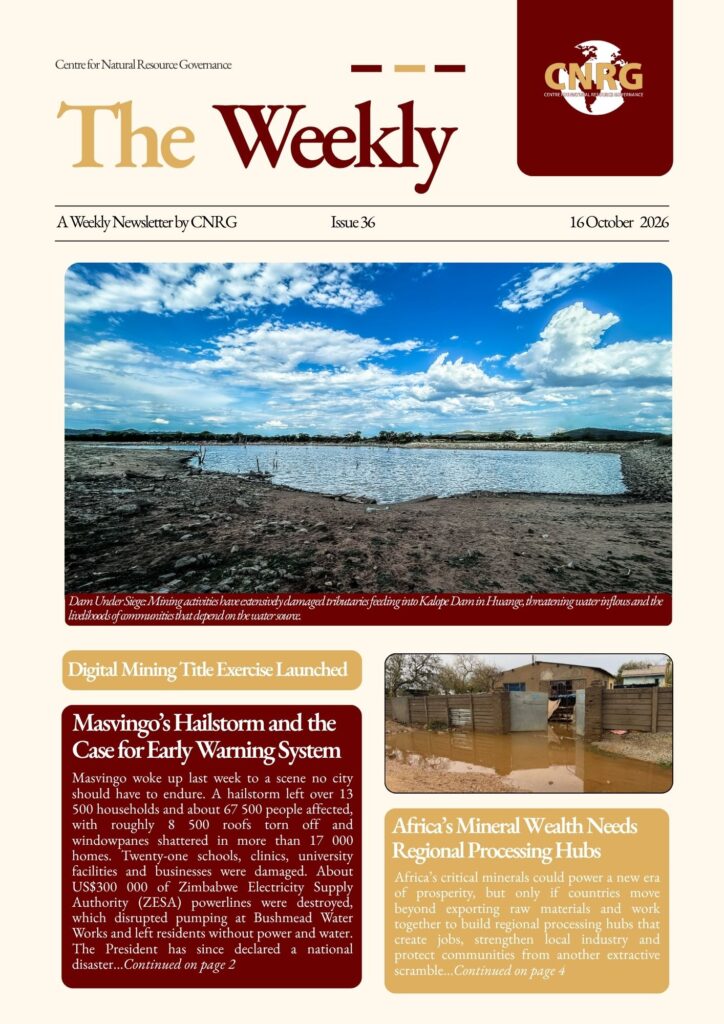
That same principle of accountability runs through our reports on sewage pollution in Mutare and the growing pressure on the Lukosi River and Kalope Dam in Hwange. Repairs and official assurances are important, but they cannot erase years of environmental harm or answer the concerns of families whose health, water and livelihoods are at stake. Communities deserve transparent investigations, credible monitoring and a genuine voice in decisions about the natural resources on which they depend.
Our examination of Africa’s critical minerals asks a broader question about the kind of development the continent should pursue. Regional processing hubs could help African countries retain more value, create skilled employment and build stronger industries. Yet value addition must not become another name for dispossession, pollution or deals negotiated without public scrutiny. Economic ambition must be matched by responsible governance and enforceable safeguards.
The launch of Zimbabwe’s mining-title digitisation exercise offers an opportunity to improve transparency, reduce disputes and strengthen confidence in mineral-rights administration. Its success, however, will be measured not simply by the technology introduced, but by the accuracy, accessibility and accountability it delivers.
Finally, the call for seed sovereignty reminds us that resilience also begins in the field and at the household level. Protecting indigenous seed, supporting traditional grains and combining local knowledge with climate-smart farming can strengthen food security while giving farmers greater control over their future.
Together, these stories urge us to look beyond short-term responses. Zimbabwe needs institutions that anticipate risk, listen to communities and place public welfare at the centre of development. We hope this edition informs, challenges and inspires practical action towards a fairer, more resilient and environmentally secure nation.
editorial note | the weekly 36th edition