

1Off-target production falls by fifteen percent.
2Sector blighted by unsafe artisanal mining practices.
The country’s lucrative but murky gold sector production plunged by a significant 15% in 2023 according to official data, owing to a myriad of challenges including power outages and currency volatility.
Bullion production totaled 30,11tons falling short of the government’s ambitious target of 40 tons according to data from Fidelity Printers and Refineries- the state-owned sole processor of the country’s gold, in a decline also fuelled by challenges in the artisanal sector.
Zimbabwe is also lagging behind regional peers and remains largely under-explored with operating mines struggling to raise capital due to concerns over government policy and property rights. Artisanal miners, which have bridged the gap following years of underwhelming performance at the turn of the century, are struggling as unsafe mining practices derail the progress made.
Once among the top bullion producers on the continent, Zimbabwe has fallen far behind regional peers Ghana, Mali, Burkina Faso, Guinea and Tanzania as an extended economic crisis keeps investors at bay.
Capacity utilisation in the sector dwindled in early 2000, as the country’s economy went into a nosedive at the height of an unprecedented political and hyperinflationary crisis with a paltry 3 tons produced in 2008.
Although production has gradually recovered in recent years, reaching an all-time high of 35 tons in 2022, the country still lags behind its regional peers, despite its significant potential.
Currency challenges in the country owing to a weak currency and a settlement arrangement where gold producers, along with all other exporters from the country, receive 75% of their earnings in U.S. dollars and the balance in local currency.
In perspective, the New Dispensation’s open-for-business mantra has been reduced to mere tokenism as the local currency introduced by Finance Minister Professor Mthuli Ncube lost more than 80% of its value last year alone.
Compounding this liquidity crisis is a utility challenge of intensified power cuts as frequent breakdowns bedevil Hwange’s ageing coal-fired plants, while generation at the Kariba hydropower station continues to be throttled by climate change-induced low water levels.
Most of Zimbabwe’s gold is produced by small-scale operators and artisanal miners, a highly fragmented structure that lacks the advantages and efficiencies of scale.
Some of the country’s top gold producers include the state-owned Kuvimba Mining House, Caledonia Mining Corporation (CALq.L), Padenga (PHL.VF) and RioZim (RTNR.ZI), with other former large-scale producers still closed.
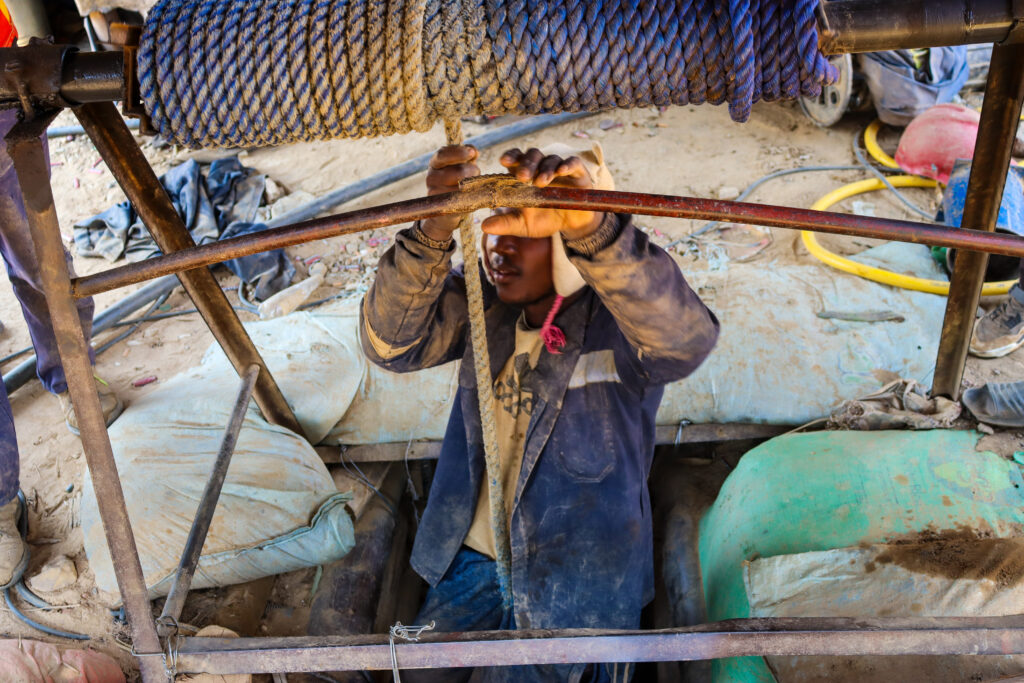
One such player is Metallion Gold-owned Redwing Mine in Penhalonga, which tanked operations leading to unsustainable tributary agreement after falling into judicial management as workers went unpaid for months on end.
Operations at Redwing have subsequently deteriorated to haphazard small scale and an influx of artisanal miners under concessions backed by Better Brands a mining company owned by politician and MP Scott Sakupwanya.
Centre for Natural Resource Governance (CNRG) has warned of the unsustainability of such operations in a report on the Redwing mine, warning of the prevalence of illicit and underhand dealings.
A recent mine collapse, which trapped 15 artisanal miners underground, serves to underline the irresponsible mining operations, that have also contributed to the significant decline in gold production.
In a joint press statement issued in the wake of the tragic incident, CNRG together with other civic society organisations expressed concerns over the proliferation of unsafe mining practices in the gold sector.
CNRG collaborated with the National Mine Workers Union of Zimbabwe (NMWUZ) and the Zimbabwe Diamond & Allied Minerals Workers Union (ZDAMWU) in condemning the avoidable mine collapse.
The statement demands a thorough investigation into the mine collapse that occurred at Redwing Mine on the 4th of January 2024 at around 6am and an appropriate response to ensure such a disaster does not occur again.
The statement said preliminary investigations show that operations which led to the collapse were under a mine not properly registered and was operating without a mine manager as stipulated in Statutory Instrument 109 of 1990 Mining (Management and Safety) Regulations.
It stated ” All safety procedures were not being followed. Underground pillars had been knocked down, thereby rendering the mine a death trap. The removal of pillars must have been observed by the inspectors from the Ministry of Mines and Mining Development if they were doing their work properly.”
In its recommendations, CNRG called for an impartial investigation into the Redwing Mine disaster and a clear roadmap on the future of Redwing Mine and its gold-rich surroundings with a special focus on workers’ safety, well-being and livelihoods, environment and governance of mining operations in the area.