
Here’s something that Zimbabweans from Manicaland to Matebeland (all) provinces have in common—they grouch over the hurt of past conflicts, which have precipitated the rotten state of the economy. When the government announced its intention to hold the Gukurahundi Community Outreach Program in March this year, to gather evidence on the darkest chapters of the country’s post-colonial history, it was difficult to know what to expect.
Just like in Operation Murambatsvina (2005), structural political violence (cue the 2008 electoral runoff), Zimbabweans have gotten used to cyclical violence and recurring conflicts, which have ebbed away at national cohesion. As a result, the country’s economy is stuttering badly from decades of economic mismanagement, regress, and rising social inequalities.
The Weekly has been writing about this dissonance in Zimbabwe, profiling through a series of articles on natural resource governance, climate change, and social and economic justice on the state of our economy. Overall, it is underperforming, sometimes at unprecedented levels. Ordinary Zimbabweans—are affected most, and just can’t seem to enjoy life with decency and dignity in their country.
Contemporary Zimbabwe is grappling with multifaceted conflicts permeating various societal levels. Her state of peace is precarious, and national cohesion remains elusive. Social conflicts, such as land disputes and ethnic differences, simmer beneath the surface. There is a common faultline in all these conflicts, an inextricable link to political power struggles and socioeconomic challenges.
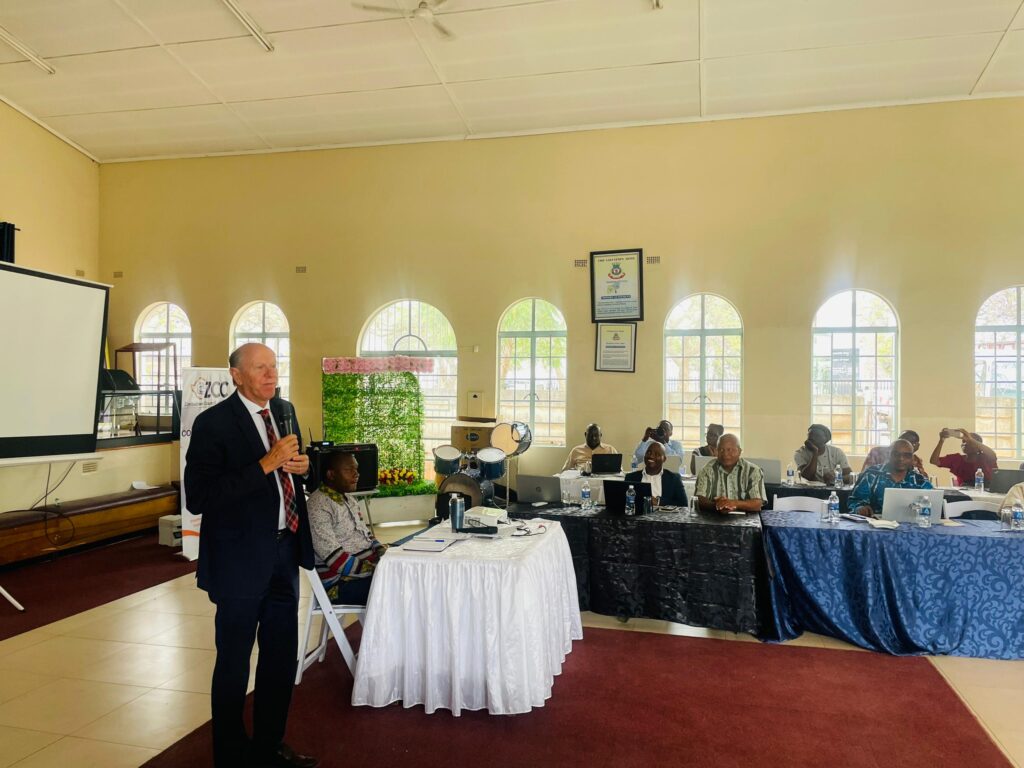
During an inaugural Peace Indaba (15-16 October 2024) organized by the Zimbabwe Council of Churches (ZCC), Zimbabwe Peace Project, and Ecumenical Church Leaders Forum (ELFC), conversations centered around Zimbabwe’s history, which has been marked by recurring cycles of violence and human rights violations, often on a vast scale.
ZCC is a leading ecumenical body committed to justice, peace, and reconciliation in Zimbabwe, and envisions a peaceful and just society through its different programming initiatives that seek to foster a peaceful society.
Organizers said the Peace Indaba was aimed at fostering ‘meaningful dialogue and collaboration among government stakeholders, parliamentarians, and civil society organizations to promote sustainable peace, unity, and reconciliation in Zimbabwe.’
“Such an effort takes into cognizance the importance of collective and holistic approaches towards peacebuilding where a platform to reflect and develop actionable plans towards cultivating a culture of peace is fostered.
“Various challenges, including political divisions, social injustices, and economic hardships have marked Undoubtable, Zimbabwe’s path to peace and reconciliation. The role of multi-stakeholder engagement is essential in creating inclusive platforms where communities, civil society, government actors, and lawmakers can collectively explore solutions and develop peacebuilding strategies with the hope of cultivating a culture of peace in the country.”
In the post indaba communiqué, ZCC affirmed its role and the need to “strengthen pulpit peace awareness to address violence, and promote unity, peace and security for women and vulnerable groups.” This will be achieved by the establishment of a Faith-Based Truth, Justice and Reconciliation Process to proffer a culturally sensitive alternative and complement the state-led initiatives.
Sensitivity to local community needs is critical in an era where contemporary conflicts emanating from economic injustices are being perpetrated by foreign investors in the extractive sector. A recently published report by the Centre for Natural Resource Governance (CNRG) highlights how Chinese mining ventures have led to widespread environmental degradation, disregard for the cultural rights of host communities, and, in many cases, the violation of the country’s labor laws, often with apparent impunity.
The research Investment or Plunder An analysis of Chinese Investments in the mining sector in Zimbabwe investigated key aspects essential to any mining enterprise, including environmental impact, labor rights, and the observance of the sociocultural rights of host communities.
Keyt findings show that “Local communities have not been meaningfully consulted regarding Chinese-led projects, and the entry of Chinese-owned companies has been met with significant community resistance. These conflicts are likely to persist until the rights of communities are respected, and their meaningful participation in the governance of natural resources is assured.”
This perpetuates economic exclusion of indigenous people in the economic value chains, not limited to the mining sector but across the board, leading to the current state of underdevelopment. CNRG staters that increasingly, ordinary Zimbabweans are accusing China of exhibiting colonial traits. This speaks to the re-emergence of an enclave economy or a bifurcated state, where ordinary citizens and communities are subaltern to political elites and their cronies.
This lack of inclusive economic and social protection policies entrenches structural violence, with a small section of political and economic elites systematically benefiting economically in the country while the majority are disenfranchised and inequalities increasing. It is not only an indictment on government but a wake up for civic society, traditional leaders, media and the church to bridge this widening gap.
To engender conflict resolution, national cohesion and peace ultimately drives sustainable and inclusive economic development. It is premised on the foundational principles of the Constitution which compels promotion of national unity, peace and stability. Zimbabweans deserve to enjoy life with decency and dignity in their country.