
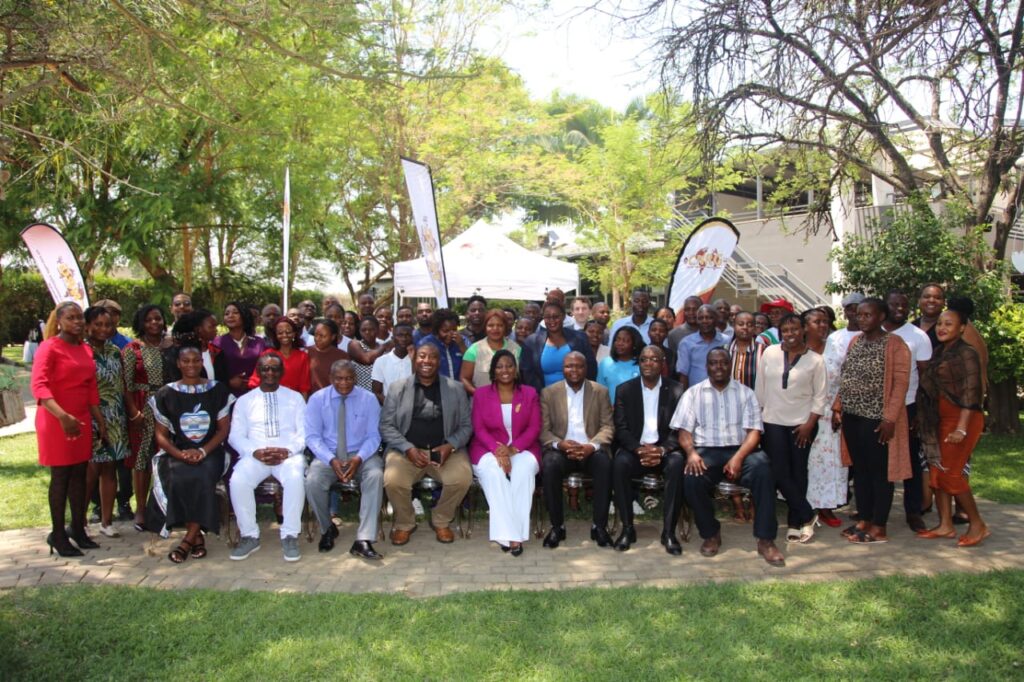
We, the marginalized communities, civil society organizations, community-based groups, traditional leaders, women farmers, youth, mining-affected communities, parliamentarians, and representatives from progressive government ministries and departments, convened at the People’s COP 2025 in Harare, Zimbabwe, to reaffirm our shared commitment to climate justice and inclusive development.
We recognize that:
– Climate justice is essential to achieving sustainable development.
– Community voices must be central in shaping climate responses.
– African leadership plays a vital role in advancing global climate solutions.
– Transparency and accountability are key to building trust and delivering real impact.
We are concerned that:
– Zimbabwe’s per capita emissions have increased by 43% between 1990 and 2022, yet the most vulnerable communities continue to bear the brunt of climate-related impacts.
– The country has experienced recurring droughts (2012–13, 2015–16, 2018–19, 2023–24) and devastating tropical cyclones (Eline, Japhet, Dineo, Idai, Chalene, Eloise, Ana, Freddy), which have severely affected the livelihoods and dignity of the Zimbabwean communities.
– Africa requires over USD 3 trillion to meet climate goals by 2030, yet it received only USD 30 billion between 2021 and 2022. Zimbabwe alone needs approximately USD 10.31 billion for adaptation between 2023 and 2030.
– Much of the adaptation finance is provided as loans rather than grants, placing additional burdens on countries already facing economic challenges.
We affirm that:
– Every living being reflects the wisdom of creation, and our stewardship of nature must be guided by justice and equity.
– Communities have long protected ecosystems and must be recognized as key partners in conservation and climate action.
– Indigenous Knowledge Systems offer valuable insights and solutions that complement scientific approaches.
Our Key Demands:
1. On Climate Finance
– Prioritize grant-based funding mechanisms that ensure direct access for communities.
– Promote transparency and accountability in the management of climate finance.
– Fully capitalize the Loss and Damage Fund to support those most affected.
2. On Energy Access
– Support community ownership of renewable energy projects.
– Accelerate efforts to provide electricity to the 630 million Africans currently without access.
– Advance Zimbabwe’s renewable energy targets, including 300 MW solar and 500 MW wind.
3. On Food Sovereignty
– Strengthen support for smallholder farmers, particularly women who produce most of the food.
– Recognize and integrate Indigenous Knowledge Systems such as Zunde raMambo, Pfumvudza, and community seed banks.
4. On Mining Governance
– Ensure transparent and equitable benefit-sharing and operationalize the environmental fund for land rehabilitation.
– Uphold the principle of free, prior, and informed consent for all mining operations.
5. On Nature Protection
– Promote community-based forest management and the protection of sacred sites.
– Recognize traditional conservation practices as part of national strategies.
Accelerate
CALL TO ACTION
To the Parliament and Government of Zimbabwe:
– Strengthen climate legislation and ensure climate-responsive budgeting.
– Enhance coordination across ministries and bring climate finance discussions to rural communities.
To African Leaders:
– Present a unified voice at COP30.
– Advocate for community-centered climate actions and push back on false climate solutions.
To the Global North:
– Honor historical responsibilities by supporting climate finance through grants, not loans.
– Recognize that climate finance is a matter of justice, not charity.
To COP30 Organizers:
– Create space for meaningful participation of marginalized communities in negotiations.
– Move beyond symbolic inclusion to genuine engagement.
To Multilateral Institutions:
– Simplify access to climate finance and ensure the finances reach intended beneficiaries – grassroots communities.
Support civil society climate actions to sustain research, advocacy, and community outreaches by CSOs
To the Private Sector:
– Respect community rights and ensure equitable benefit-sharing in all climate-related projects.
– Commit to environmental rehabilitation as a standard practice.
To African Civil Society:
– Strengthen solidarity across the continent and amplify diverse voices in climate advocacy.
To Global Civil Society:
– Partner with African communities in a spirit of solidarity and mutual respect.
– Support local leadership and avoid practices that undermine grassroots movements.
The clarion call
We stand at a pivotal moment. The decisions made between now and COP30 will shape the future of our planet and the lives of generations to come. We believe that:
– Climate action must be rooted in justice.
– Finance must be accessible to those affected the most.
– Solutions must be informed by local voices and experiences.
We affirm Africa’s role not only as a region impacted by climate change but also as a source of innovative, sustainable, and inclusive solutions. Our communities, especially women and youth, are powerful agents of change and must be empowered accordingly.
We commit to continuing our advocacy, mobilization, and engagement to ensure that climate justice becomes a lived reality for all.
Let this Harare Declaration resonate from Zimbabwe to Brazil, and from Africa to the world.