
By Ndaizivei Garura
The global demand for critical minerals like copper, lithium, chrome, and cobalt has increased mining activities in countries like Zimbabwe. These minerals – essential in producing modern technologies, such as smartphones and electric batteries, have been presented as a game changer. However, they are leaving a trail of destruction locally in communities like Bikita, Shurugwi, Hwange, and Mutoko. The challenges that are faced by these communities outweigh the economic benefits, if any.
One of the major challenges associated with mining critical minerals in Africa is the displacement of local communities. Mining companies often require large areas of land for their operations, leading to the forced relocation of communities and the destruction of homes, farms, and other sources of livelihood. This displacement can be particularly devastating for indigenous communities, who often have deep cultural and spiritual connections to the land they are forced to abandon.
In Mutoko, Chinese-owned mines have displaced villagers in the Makaha area where they have built alternative sub-standard houses for them. These houses have started cracking and the villagers have no means to rehabilitate them, thus compromising their safety. Their fertile and very productive agricultural land that used to be their source of livelihood has been turned into mines. They are now being forced to find alternative means of livelihood in unfamiliar environs that require new skill sets. Some were promised monetary compensation which they are still to receive more than 5 years after the displacement.
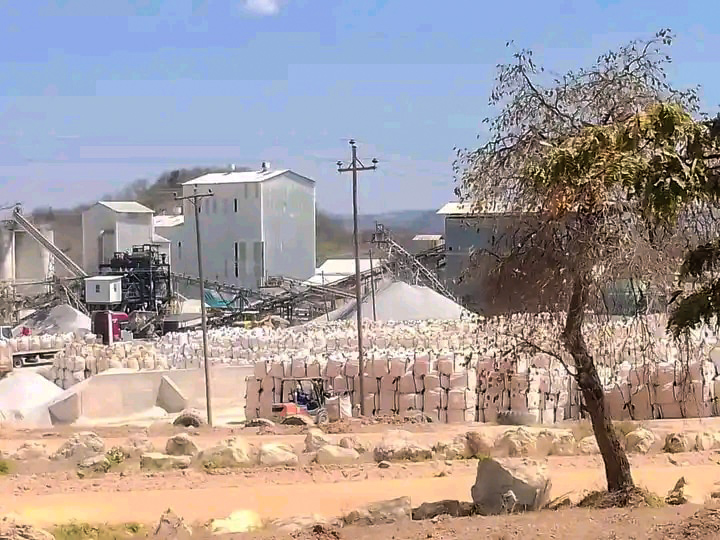
In addition to displacement, mining has serious environmental consequences. These have been experienced in the Hwange district where there was rich biodiversity in the surrounding Hwange National Park, forestry areas, and the nearby Rainforest in Victoria Falls. Mining activities have resulted in deforestation, soil erosion, and water pollution. At Bikita Minerals CNRG witnessed massive clearing of forests and removal of overburden as the mine expands northwards. These mining activities are affecting the local ecosystems and the wildlife that depend on them. Often the environmental cost of extracting critical minerals is never factored in. This is a loss communities are expected to bear alone.
The government of Zimbabwe is pursuing a 12-billion United States dollar mining economy by 2023 – a vision that has seen the government going all out for mining whilst ignoring social and environmental costs. There is a need for the government to uphold the country’s environmental regulations despite the need to cash in on the demand for minerals. This will ensure communities are not victims of the rush for critical minerals.
The mining of critical minerals must not be used to justify human rights abuses and exploitation of labour. Two weeks ago, CNRG reported the killing of an artisanal miner at a dumpsite outside Bikita mine. There has not been accountability for this callous murder. Further, their mining operations are characterized by poor working conditions, low wages, and a lack of safety standards with extremely high-risk levels for workers. Child labor has also been reported in some of Chinese mining operations in Hwange and Shurugwi. Young people of school-going age are often spotted working in these dangerous and hazardous conditions.
Because the same exploitative extractivist model that has characterized the extraction of other minerals has now been extended to the critical minerals sector, mining continues to exacerbate existing inequalities leading to further marginalization of vulnerable communities. Behind the economic boom of mining as reported in the tonnage of minerals produced there lies the dark reality of zero benefits to the communities where these critical minerals are extracted.
Nevertheless, at CNRG we believe it is possible to share the benefits of critical minerals with communities and workers who produce them. Ultimately, the long-term benefits of mining critical minerals can only be realized if it is done in a way that ensures equitable distribution of the benefits. It is crucial for mining companies, policymakers, and civil society to collaborate in developing frameworks and enforcing regulations that prioritize the importance of the community, workers, and the environment in the extraction of critical minerals.
This opinion piece points to an even greater tension on a global scale being the continuation of the global economic metabolism now in the name of “decarbonization “ and the move to clean energy. This has resulted in demand for critical metals hence we are seeing the expansion of Chinese interests and operations in African mines in general . The way I see this is that this is a vicious cycle leaving Africa plundered by external forces at expense of sustainable development for its people. We need a shift in policy that recognize this unequal ecological exchange that leaves us with disintegrated communities, climate change impacts, huge gender and economic inequalities and wealth inequities. My last thought is a call to African scholars, practitioners and citizens to think carefully what our response is . How can we use our “Ubuntu” – humanness to turn this around. Our grandfathers fought colonialism head on how do we self-organize against unsustainable minning practices and policies.