
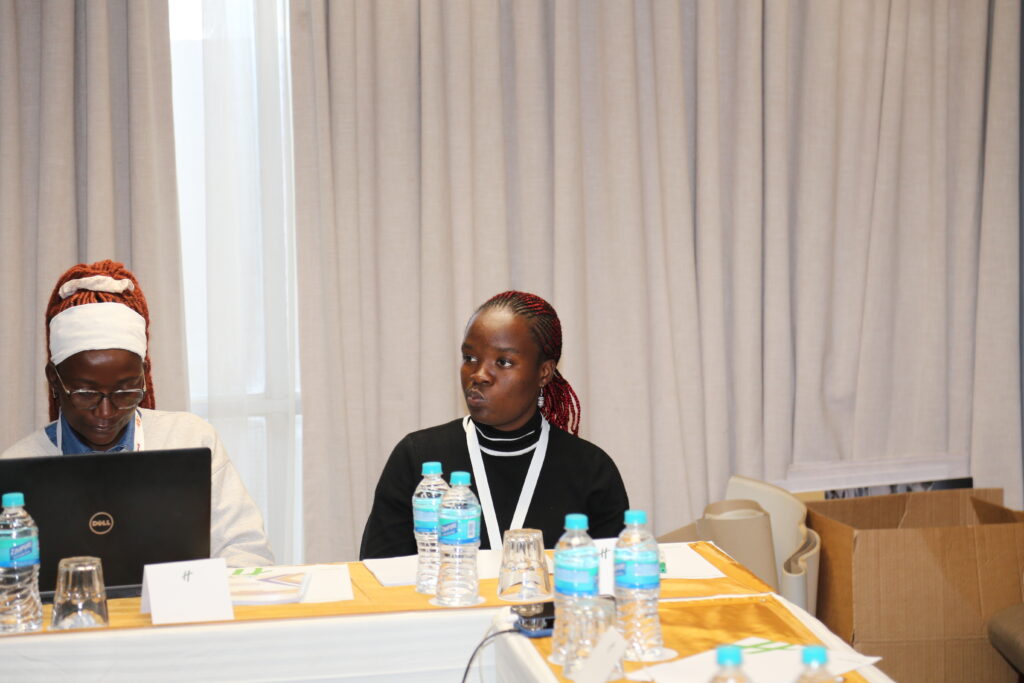
By Natalia Marovatsanga
I signed up for the Natural Resources Governance and Accountability School hosted by the Centre for Natural Resource Governance (CNRG) in Mutare because I wanted to understand what “accountability” really means. For a long time, the term felt like a buzzword I’d see on LinkedIn and environmental blogs—something distant and abstract. I wasn’t sure how it related to me, or what role I was supposed to play as an individual. That curiosity became my main motivation for joining the cohort.
Moreover, I’ve always been drawn to spaces where rights, gender equality, and social justice are being discussed. If there’s a room where those conversations are happening, you can be sure I’ll be there ready to listen, contribute, and advocate. That passion, combined with my growing concern about the environment and inequality, made the decision to attend this school an easy one.
The school ran under the theme: “Reimagining the Future: Approaches to Extractives and Climate Justice.” The experience was both intellectually enriching and unexpectedly fun. We engaged in role-plays—some of which were hilarious but deeply informative—and the facilitators made sure everyone had space to express unfiltered thoughts. The atmosphere was collaborative and relaxed, making it easier to build friendships and learn from each other’s diverse backgrounds.
Participants came from all over Zimbabwe, including mining-affected communities like Hwange, Bikita, and Marange. Their lived experiences added depth to our discussions. Hearing firsthand how extractive industries affect their daily lives was eye-opening. Their stories weren’t just about struggle—they were about survival, resistance, and vision.
One major insight I took away is the cost of having a youth population that remains passive. When young people don’t question power or push for accountability, the consequences are devastating poverty, corruption, civil unrest, exclusion, externalisation, and environmental degradation. The school made it clear—it’s time for youth to start putting people and communities before profit.
As a now well-equipped graduate of the school, I plan to use digital tools to raise awareness on sustainable resource use. I will be blogging and creating short, engaging videos to inform and collaborate with my peers. I believe in the power of collective action—we can go further if we work together.
I also plan to volunteer with organizations focused on climate advocacy. I want to gain hands-on experience in activities like tree planting, clean-up campaigns, and recycling projects. This is part of my personal journey toward becoming an environmental steward—because I am the change I want to see in the world.
From the very first day, one message stood out: questioning injustice is not rebellion—it’s a civic responsibility. As young people, we must hold our leaders accountable because we are the ones living through the consequences of poor governance, unsustainable mining, and climate degradation.
One statement by CNRG Director Farai Maguwu has stayed with me. He said, “The planet will always be there. Sustainability is about saving mankind from living on a planet we can no longer survive on.” That hit hard. It forced me to think beyond environmentalism as a trend and to see it as a survival imperative.
This was reinforced by the school’s powerful mantra: #PeopleOverProfit. True sustainability means balancing the needs of people, the planet, and communities—ensuring equity, inclusion, and justice in all we do.
Good resource governance can transform economies and communities. It can create jobs through value addition, secure futures, and empower communities to participate in decision-making. But to achieve this, we need collaboration.
One of the most informative sessions was a presentation by Franklin Mukwaira from the National Association of Non-Governmental Organisations (NANGO), who emphasized the need for Multi-Stakeholder Partnerships (MSPs). These partnerships foster shared responsibility, diversity, and mutual respect. Of course, challenges exist—such as bureaucracy, tokenism, and limited resources—but the benefits of genuine collaboration far outweigh the setbacks.
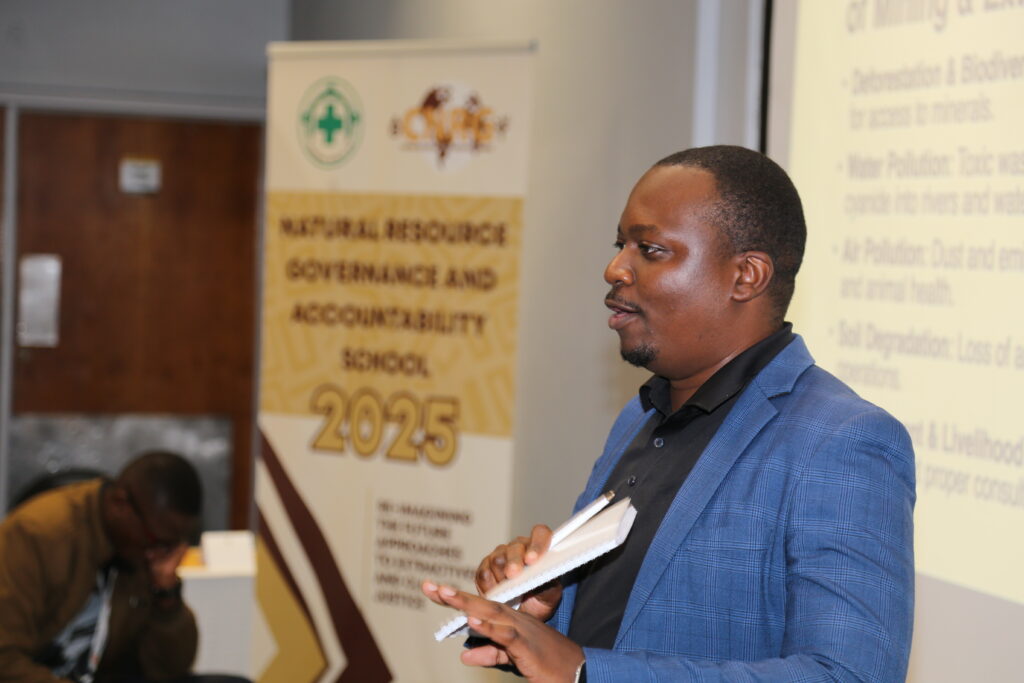
Mr Fanklin Mukwaira, NANGO eastern region coordinator making a presentation at the school
We also received practical tools for advocacy. From storytelling and digital campaigns to capacity building, we were empowered to act beyond the classroom.
The Environmental Management Agency (EMA) reinforced the importance of inclusivity, transparency, and stewardship in sustainable governance. Importantly, they reminded us to be cautious of misinformation, especially from social media, and to always seek credible sources.
A presentation by the Zimbabwe Human Rights Lawyers regional manager, Peggy Tavagadza was another highlight. I learned that every human need corresponds with a right and when it comes to natural resources, communities have a right to information and a right to participate in decisions about their land and livelihoods. This was a wake-up call. Legal frameworks must be reformed to ensure fair compensation, stronger labour protections, and meaningful grievance mechanisms for affected communities.
As a law student, this experience has reshaped how I see my role. Going forward, I will use my legal knowledge to spotlight gaps in Zimbabwe’s legal systems especially problematic provisions in the Mines and Minerals Act that allow for environmental destruction, community displacement, and unchecked investor power.
The law must be a tool for development justice, not just regulation. It must protect people, not just profits. It must serve as a bridge between human rights and environmental sustainability.
This cohort reminded me that my voice matters. As a future stakeholder in climate decisions, I must speak up because I will inherit the consequences of today’s choices. And I am not alone. Together, the youth must build a future where justice, sustainability, and dignity are not dreams but realities.