
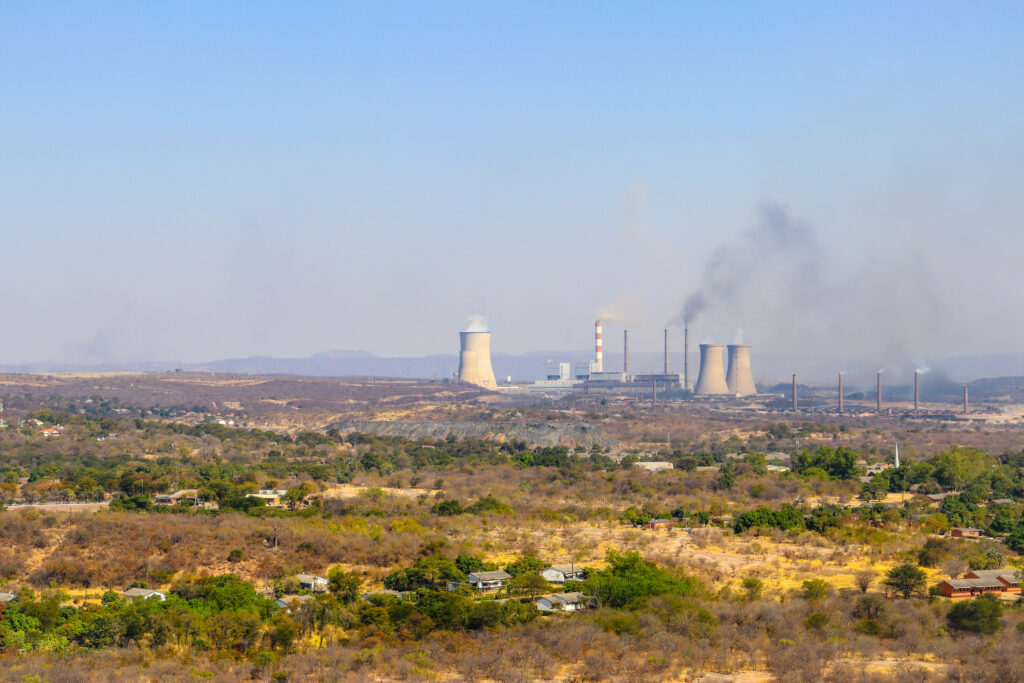
The Greater Hwange Residents Trust (GHRT) has put forward a petition to the Environmental Management Agency (EMA) imploring the agency to monitor and regulate emissions of pollutants or hazardous substances in the district.
The residents’ association particularly want EMA to monitor emissions of hazardous substances in the Ingagula township of Hwange by the Hwange Thermal Power Station.
The petition obtained by The Weekly is referenced as “Monitoring and Regulating emissions of pollutants or hazardous substances into the environment (Ingagula township)”.
Part of the petition reads:
“We write to inquire if your office has been regularly monitoring and regulating the discharge or emission of pollutants or hazardous substances into Ingagula township from the power station in line with section 9 of the Environmental Management Act (2002) which provides for the establishment of the Environmental Management Agency (EMA), whose duties in accordance with the law are to:
“Formulate quality standards on air, water, soil, noise, vibration, radiation and waste Management… Monitor and regulate discharge or emission of pollutants or hazardous substances into the environment.”
The petition was signed by Greater Hwange Residents Trust coordinator, Fidelis Chima.
In addition, the residents demanded to know what tests EMA has made.
“We also request that you furnish us with the results of the air ambient tests from your office,” part of the petition reads.
Over 60,000 villagers, residing mostly west of the ZESA Holdings’ Hwange Thermal Power Station, are at risk of contracting lung and respiratory diseases because of the pollution that has characterised the mining town for decades.
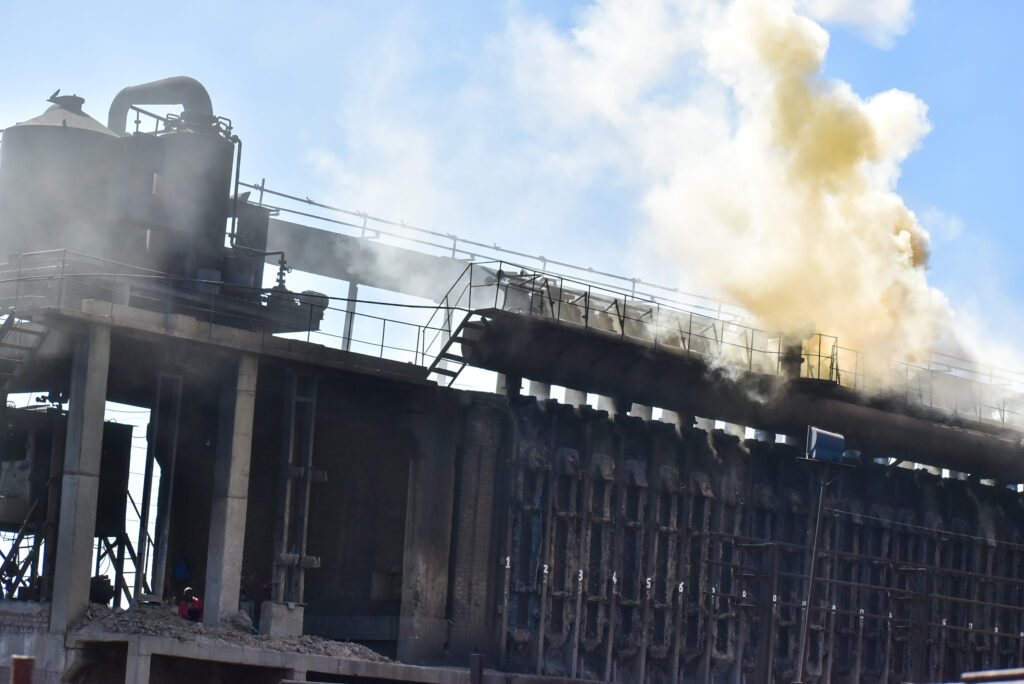
The residents are in the direct path of air polluted by plumes of smoke emanating from the furnaces firing the boilers that provide steam which then powers the turbines that produce electricity.
In April this year, Centre for Natural Resource Governance (CNRG) director Farai Maguwu in a media statement warned that residents in Hwange were at risk of contracting lung infections because of the abundant air pollution by Hwange Thermal Power Station.
“The people are at serious risk of contracting pulmonary (lung) diseases. Atmospheric air has been affected by the emissions from the Zimbabwe Power Company furnaces. The continuous emissions will in the long run contribute to acid rain, ozone depletion and global environmental problems that can potentially lead to reduced rainfall and an increase in temperatures,” he said.
“Trees and plants are dying because of the underground heat emanating from coal burial, while mining-induced subsidence, without adequate prevention or repair measures, often results in the abrupt sinking of the ground surface, destroying the ecosystem, roads and killing both humans and animals,” added Maguwu.
CNRG has therefore been trying to break the silence on the environmental disaster that has plunged the coal mining town into a further dire crisis.
Under Statutory Instrument 6 of 2007 companies and individuals face a fine or jail term or both for polluting the environment.
Hwange district boasts of high-quality coal deposits for thermal, industrial and cooking coal.
Besides the problem of air pollution, Zimbabwe has an estimated 26 billion tonnes of coal reserves suitable for power generation and at the current rate of extraction of three million tonnes per year, this translates to more than 8,000 years of mining.
The dangers are that Zimbabwe will be at the centre of perpetual carbon emissions for centuries to come and emitting of toxic gases that include sulphur dioxide, nitrogen oxides, carbon dioxide and mercury, which are hazardous to general life and the environment.