
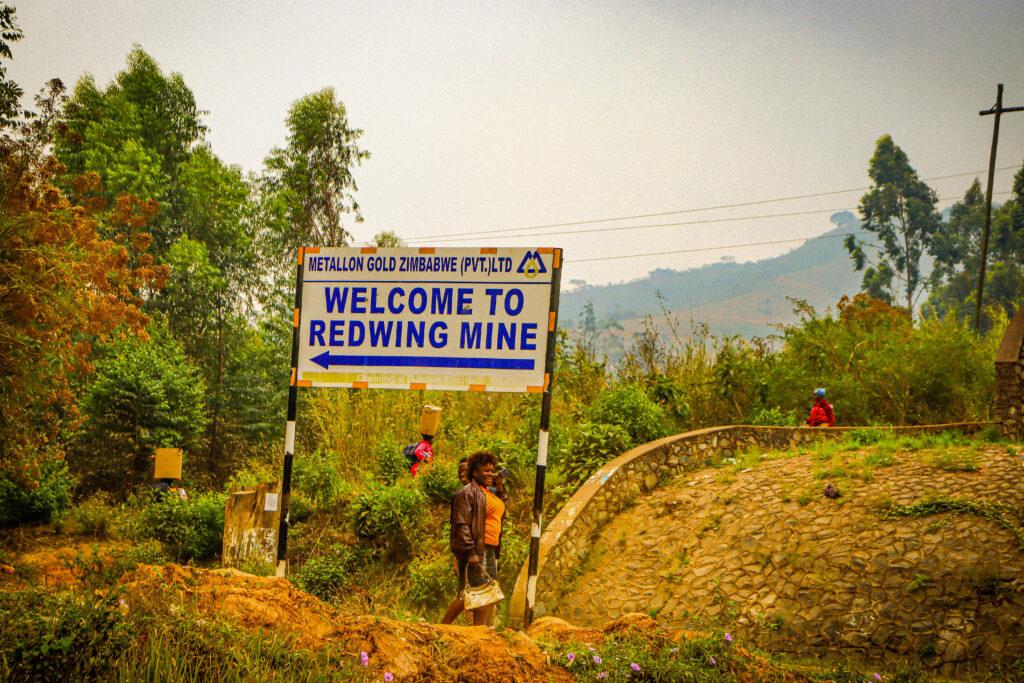
In a recent development following the unprecedented mine collapse at Redwing Mine, the government has backtracked on a purported ban on artisanal and small-scale mining activities at the Metallon Gold unit giving a green light to continued unsafe mining of gold in Penhalonga.
In a statement issued last week, Minister of Mines and Minerals Development Soda Zhemu reduced the government’s intervention at the mine, triggered by a shaft collapse which trapped 15 miners four days underground, to a mere warning without tangible measures to promote safe mining practices.
The Weekly can reveal that the government has not halted operations but has granted a green light to the continued operations of small-scale and artisanal miners despite the foregoing safety concerns emanating from the fragile mining fields.
“As government, we engaged artisanal miners in the gold fields of Penhalonga, Redwing Mine based on persistent rainfall in January, with a view of warning them of the dangers of working under such dangerous conditions.
“However, we have not stopped small-scale and artisanal mining operations as is the misconception by people. Our warning to artisanal miners is that they should use their discretion and not enter in shafts to mine in areas where they place themselves in danger,” said Zhemu.
This move resoundingly signifies a disconnect from reality by government to the plight of artisanal miners, the environment and surrounding Penhalonga community exposed to the debilitating impacts of the unregulated mining activities.
Government had initially ordered the suspension of mining operations at Redwing Mine following the collapse of a shaft, a move which was now appears a mere stop gap measure without conclusive intent to formalise operations.
After the accident on January 4, acting Local Government Minister July Moyo ordered for the halting of mining operations at the mine, to allow rescue operations a statement misconstrued as a blanket ban on all activities.
“Government would like to assure the nation and anxious families of the miners, in particular that search and rescue operations will continue into the coming days. In the meantime, Government will render support to these families during this difficult time. For the avoidance of doubt and contrary to some unsubstantiated reports circulating on social media platforms, the trapped miners are employees of Metallon Gold,” said Moyo.
While mine accidents are not uncommon in Zimbabwe where disused mines often attract young unemployed men and women, Minister Soda and his administration appear unfazed by these recurring accidents as he has extended an olive branch to politically linked operators at the mine.
Mining operations at Redwing have been largely undertaken by subsistence miners carrying out unsanctioned work since the mine was placed under corporate rescue in 2020, under a dubious tributary agreement with Better Brands mining company.
For years, many unemployed young men in Zimbabwe’s gold-rich areas have earned a living by working in unregulated mines with little to no safety procedures, while benefitting politically connected benefactors like Better Brands owner Scott Sakupwanya of ZANU PF.
Previous investigations also show that Better Brands’ operations are in violation of Statutory Instrument (SI) 258 of 2018 Environmental Management (Control of Alluvial Mining) (Amendment) Regulations, which outlaw setting up washing plants, ore stockpiles, slime dams or mining ponds within 500 meters from a riverbed.
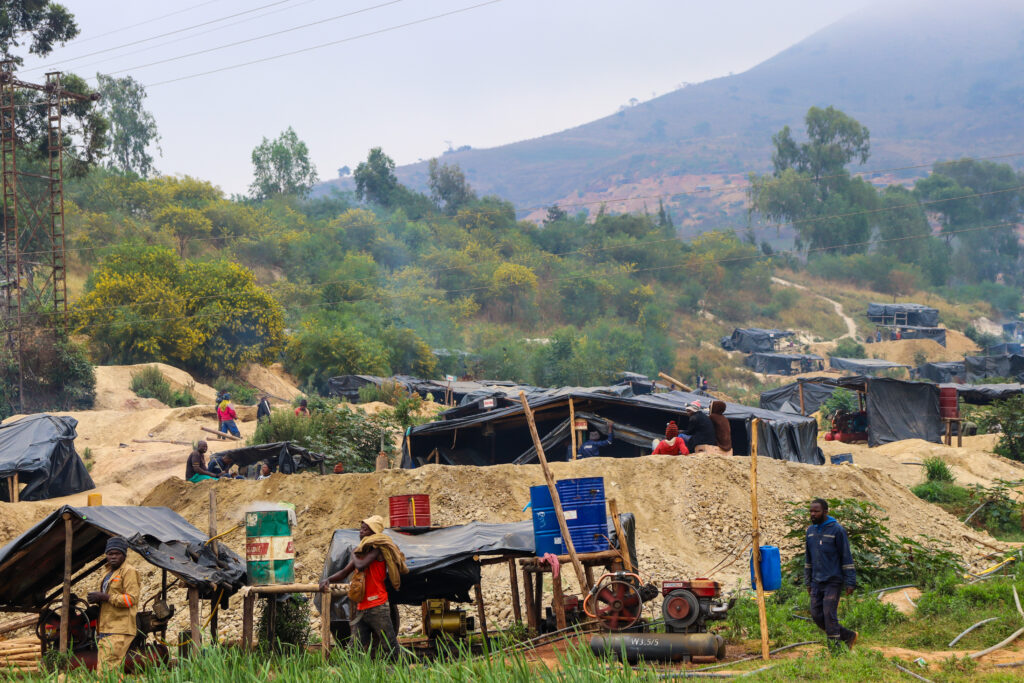
Part of the unregulated temporary settlements occupied by subsistence miners.
In demanding justice and dignity for communities affected by extractive industry operations Centre for Natural Resource Governance has condemned operations at Redwing Mine as a conduit of political funding and illicit financial flows.
A 2018 study by CNRG entitled Mortgaging the future in return for power, on the eve of disputed 2018 general elections chronicled how proceeds from the gold sector were used to fund political activities and to prop up the regime.
This study is a tip of the iceberg and not ‘exhaustive in exposing the way political parties have been plundering the country’s mineral resources to fund their election activities, but it provokes debate for citizens to demand transparency and accountability in the manner the natural resources are being exploited.’
To this day politically connected persons have benefited from the unregularized artisanal mining activities, with no clear formalisation plan from government despite the contributions of the artisanal sector to gold production.
Similarly, CNRG shows that the gold sector unregulated activities have spread tentacles from alluvial gold deposits along rivers and dry riverbeds to large scale disused mines that are now patronized by politicians and ruling party officials.
Findings of a study, Zimbabwe’s disappearing gold: A case of Mazowe and Penhalonga estimates that “illicit financial flows (IFFs) in the artisanal mining sector in Zimbabwe are responsible for leakages of an estimated 3 tonnes of gold, valued at approximately USD157 million every month.”
The study also details how government continues to yield from unregulated activities as “the practice of artisanal mining is therefore illegal as it contravenes the Mines and Minerals Act [Chapter 21:05] which neither recognises nor defines an artisanal miner.”
“In Penhalonga, there are over 5000 gold pits that are controlled by one gold dealer… Gold barons sponsor a tightly monitored patronage system that is recruiting artisanal miners through political offices.”
Some of the recommendations proffered by CNRG include expeditious commissioning of the cadastre systems, currently under trial in Manicaland province and the formalisation of the artisanal mining sector.
“The government must expedite commissioning of the mining cadastre system that computerises allocation of and registration of all mining claims, inclusive of gold claims.
“The government should pass an ASM law that recognizes and defines artisanal miners to ensure that they are protected like what Zambia and Tanzania have done Such a law can go a long way in curbing illegal activities and will help artisanal and small-scale miners operate within the confines of the law. Their current informal status exposes them to exploitation by buyers and criminal networks.
“The government must fast track commissioning of the mining cadastre system that computerises allocation of gold claims. With such a system in place, the owners of gold claims will be properly documented and no changes in ownership can take place secretly,” states the report.