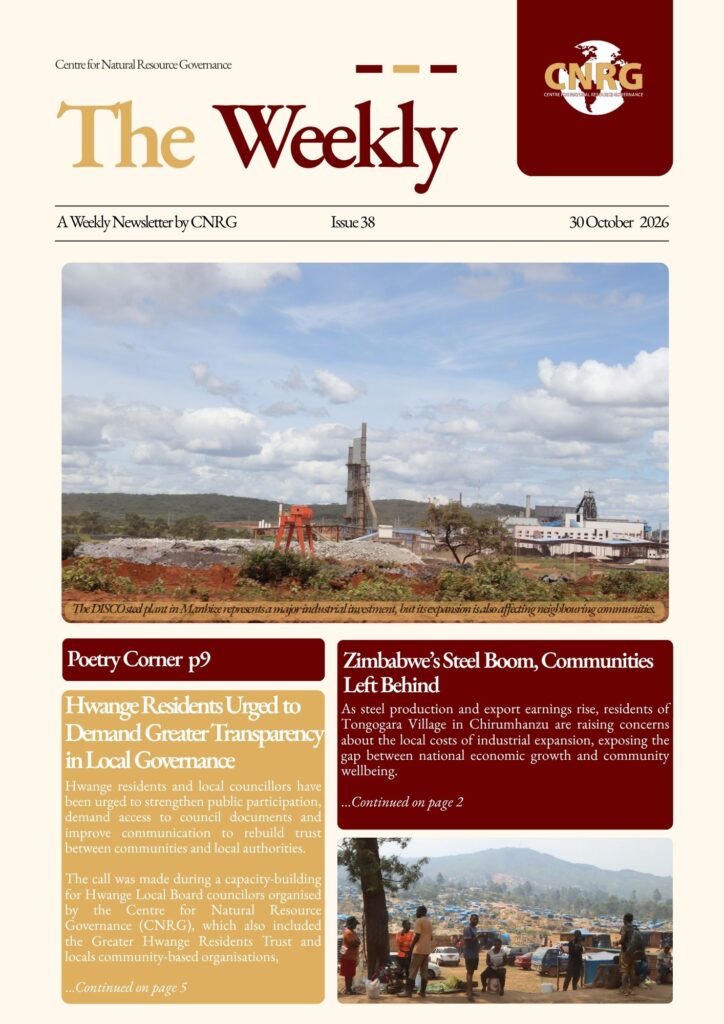
The Wealth Beneath Our Feet, the Struggles Above Ground
Zimbabwe’s mineral wealth continues to attract billions of dollars in investment, fuel industrial ambitions and promise economic transformation. From the steel plant at Manhize to the gold fields of Penhalonga and Mutoko, the country’s extractive sector is expanding. Yet, for many communities living closest to these operations, the promise of prosperity remains elusive. Instead, they are increasingly confronted with displacement, environmental risks, disrupted livelihoods and unanswered questions about who truly benefits from the country’s natural wealth.
This edition of The Weekly examines the widening gap between national economic ambitions and the lived experiences of communities expected to bear the costs of development. Zimbabwe’s growing steel production and export earnings may signal industrial progress, but the concerns raised by residents of Tongogara and surrounding villages remind us that economic growth cannot be celebrated in isolation from its social consequences. Investment must translate into decent jobs, improved infrastructure, secure livelihoods and respect for community rights.
The unfolding displacement concerns in Penhalonga, alongside land disputes in Mutoko, expose another uncomfortable reality: mineral wealth can become a source of insecurity when communities have little influence over decisions affecting their land and future. Compensation cannot simply be reduced to a payment followed by an expectation that families abandon their homes. Development must be lawful, participatory and grounded in respect for human dignity.
But accountability does not begin and end with mining companies. Local institutions must also be open, responsive and answerable to the people they serve. Our report on Hwange highlights the importance of access to public information, meaningful participation in council processes and transparent management of local resources. Communities cannot influence development priorities if budgets, strategic plans and public decisions remain beyond their reach.
This edition also brings attention to the gendered costs of extraction. Research from Hwange reveals how women and girls experience mining beyond the familiar narratives of employment and investment. From sexual exploitation and gender-based violence to barriers to healthcare and justice, the findings challenge us to confront the human consequences of an industry whose benefits remain unevenly distributed. The handover of the Hwange Community GBV Response Network offers hope that locally led structures can sustain the fight for protection, dignity and justice beyond the lifespan of donor-funded projects.
Across these stories runs one common thread: *communities must not be treated as spectators in their own development. They are rights-holders, stakeholders and custodians of the resources that sustain the national economy.
As we continue to advocate for transparency and responsible natural resource governance, we must ask difficult questions about who owns the wealth, who makes the decisions, who bears the costs and where the benefits ultimately go.
The challenge before Zimbabwe is not simply to extract more, produce more steel or attract more investment. It is to ensure that economic transformation improves the lives of ordinary people.
After all, a mining boom that leaves communities poorer, less secure and unheard is not development. It is growth without justice.