

By Donald Nyarota
There is collective outrage over proposals by the Ministry of Mines and Minerals Development to allow mining exploration in the Hwange National Park under a contentious exclusive prospecting order.
The government has been urged to set aside this proposal, which civic society organizations and conservationists say threatens Zimbabwe’s rich biodiversity, cultural heritage, and the livelihoods of communities dependent on eco-tourism.
The Centre for Natural Resource Governance (CNRG) strongly opposes the application for an Exclusive Prospecting Order (EPO No. 04 of 2021) submitted by Sunny Ye Feng (Pvt) Ltd, which seeks to conduct mining activities in the Sinamatela region of Hwange National Park.
CNRG has urged the Mining Affairs Board to reject the proposal, citing threats to ecosystems, including the Deka Safari Area, and potential economic losses to local businesses and communities reliant on eco-tourism.
“The proposed mining activities threaten this constitutional right, and it disrupts ecological balance, undermining the integrity of these critical habitats and jeopardizing the wildlife that relies on them.
“Allowing mining activities in Hwange National Park poses significant risks to the land, air, and water resources of the area. Contaminated water sources would affect not only animals but also the agriculture and livelihoods of communities in Sinamatela…” reads part of the Letter of Objection.
A Threat to Conservation and Biodiversity
Sinamatela is a critical habitat for endangered black rhinos and plays a vital role in connecting Hwange and Chobe National Parks, both of which are part of the transboundary Kavango-Zambezi (KAZA) conservation area.
This ecosystem supports a growing population of wildlife, including Africa’s second-largest elephant population. Mining in this region would cause irreversible ecological degradation, increasing the risk of species extinction.
Similarly, the Zimbabwe Parks and Wildlife Management Authority (ZimParks) has also strongly opposed this application, emphasizing that mining in this zone contradicts national conservation efforts.
In a statement, ZimParks spokesperson Tinashe Farawo said the Parks and Wildlife Act (Chapter 20:14) prohibits such activities in protected areas, reinforcing the need to preserve this unique ecosystem.
ZimParks said mining exploration would cause disruption, which can ‘worsen existing water shortages, leading to increased mortality rates in species and heightened human-wildlife conflict in surrounding communities.’
“This area is a critical habitat for black rhinos and currently supports a growing population of this endangered species, which is listed under the Convention on International Trade in Endangered Species of Wild Flora and Fauna (CITES) Appendix 1.
“Needless to mention that the proposed mining project will actually increase the risk of species extinction and prospects of population recovery will be negatively affected,” said ZimParks
Economic and Social Implication
Hwange National Park is a major driver of Zimbabwe’s tourism industry, generating significant revenue and employment for over 25,000 people. Allowing mining in Sinamatela would deter tourists, impacting local businesses and communities that depend on sustainable tourism. Moreover, the environmental impact—air, noise, and water pollution—could disrupt wildlife movement and increase cases of poaching.
Additionally, the proposed mining activities threaten sacred cultural sites, such as the Bumbusi Ruins, which hold historical significance for local communities. Traditional leaders conduct annual cultural rituals and rainmaking ceremonies at this site, making it an essential part of Zimbabwe’s heritage.
A Questionable Mining Applicant
Sunny Ye Feng (Pvt) Ltd has a history of environmental violations. In 2020, the Environmental Management Agency (EMA) issued a shutdown order against the company due to non-compliance with environmental regulations.
CNRG cited this track record as inspiring little confidence in Sunny Ye Feng (Pvt) Ltd’s ability to conduct responsible mining in a sensitive area like Hwange National Park.
“Such a background does not inspire confidence in their ability to conduct environmentally sensitive projects. A company that has shown such disregard for Zimbabwe’s environmental laws must not be seen anywhere near ecologically sensitive parts of the country such as Hwange National Park,” said CNRG.
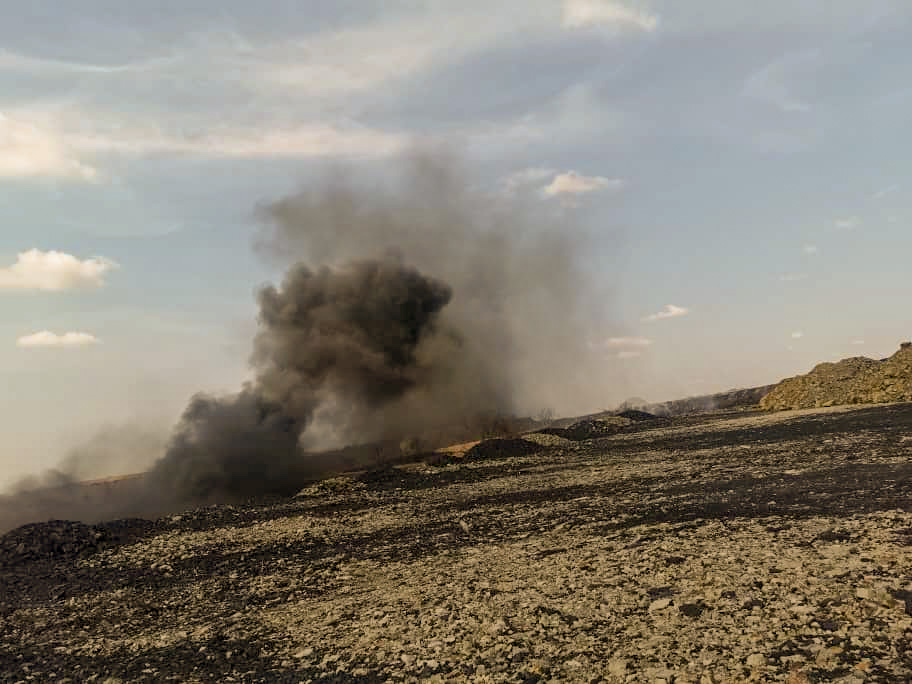
Further, Zimbabwe stands at a crossroads in its resource management. Mining coal in Sinamatela will contribute significantly to CO₂ emissions, accelerating climate change and contradicting Zimbabwe’s commitments to environmental sustainability.
Instead of exploiting non-renewable resources, the CNRG is advocating for developing Zimbabwe’s solar, wind, and pumped storage potential, which offer long-term benefits without environmental destruction.
The CNRG’s Letter of Objection also highlighted the significant climate damage caused by coal mining, with estimated costs of $1056 per ton of CO2 emitted. CNRG emphasized the need for full cost accounting, including local pollution, socio-cultural damage, and other factors.
Furthermore, CNRG noted that leaving coal underground would preserve its value for future generations, who may find alternative uses for hydrocarbons that do not involve combustion and CO2 emissions.
CNRG urged for the rejection of this mining application and the upholding of Zimbabwe’s commitment to environmental protection.
“As stewards of natural resources, we need to prioritize conservation over short-term economic gains that compromise the future of our wildlife, communities, and climate. By preserving Sinamatela, Zimbabwe will continue to be recognized as a leader in sustainable conservation, ensuring that future generations inherit a thriving, ecologically rich environment.”