

By Staff Reporter
In a powerful critique of Zimbabwe’s extractive economy, a chorus of youth voices is calling for a radical rethink of how natural resources are governed, who benefits, and who pays the price. Speaking at an inaugural Natural Resource Governance and Accountability School on resource justice, participants laid bare the country’s deep contradictions, abundant in minerals, yet impoverished in livelihoods, leadership, and long-term vision.
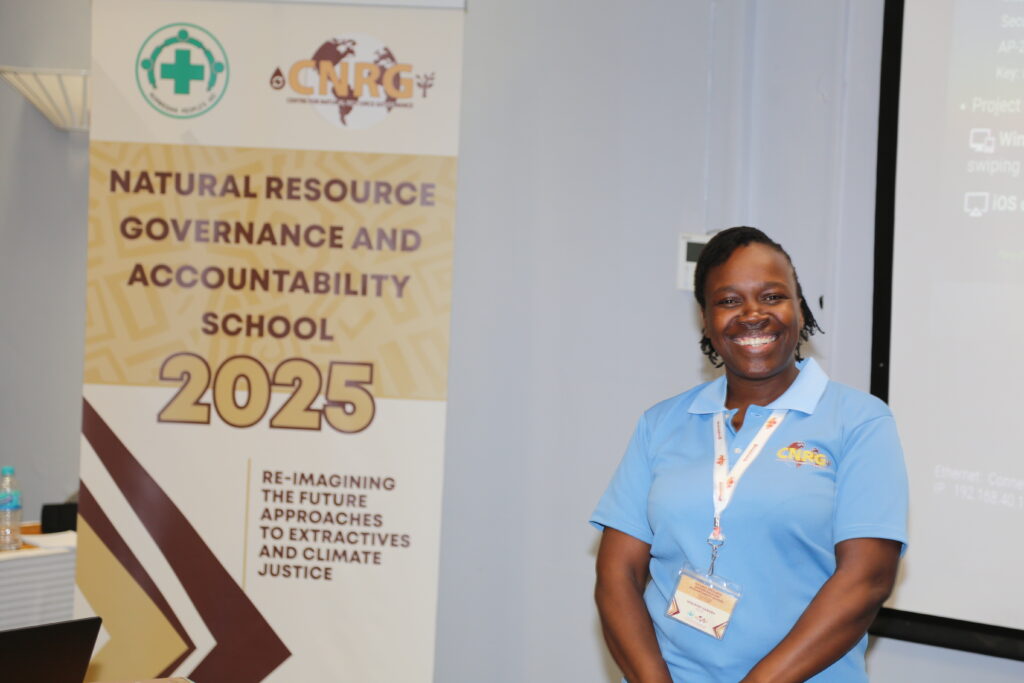
The school organised by the Centre for Natural Resource Governance (CNRG) targets empowering young people from across Zimbabwe to critique the current extractivist model and engender a cohort of youth champions.
CNRG executive director Farai Maguwu said the mining industry has perpetuated poverty in communities across Zimbabwe, exploiting valuable resources such as diamonds, gold, lithium, and others. This has resulted in significant externalized costs, including dispossession and displacement of local populations.
Maguwu asserts that mining in Zimbabwe is a manifestation of global inequality, characterized by unequal ecological exchange that prioritizes capital accumulation over the well-being of communities residing in resource-rich areas.

EXPOSING THE DARK SIDE OF MINING: CNRG Executive Director Farai Maguwu reveals how the mining industry has perpetuated poverty in communities, prioritizing profits over people
“When we talk about illegal and legal mining, who constructs those terms, who defines legality or illegality. Why must we bring foreign investors to mine minerals that the locals can equally exploit profitably?
“Somehow our policy and logic about extraction is to disempower the people and empower the ruling elites who are conduits for the benefit of the global capitalist system,” said Maguwu.
At the heart of the message was a call for strategic resource use and true economic sovereignty. “We have externalised jobs, lost revenue, and created ecological debt all because we have not been strategic,” said Freeman Bhoso, director of the Zimbabwe Natural Resource Dialogue Forum, warning against blind celebration of foreign investment. “Ask who benefits and who pays the ecological price. We’re building an ecological debt while suffering a balance-of-payments deficit.”
Bhoso argued that exporting raw materials while importing finished goods amounts to economic suicide, and that development without local benefit cannot be called development at all.

Freeman Bhoso, director of the Zimbabwe Natural Resource Dialogue Forum, stresses a point during a presentation
Linked to this is the notion of ecological and generational justice is the unseen cost of pollution and poor regulation, warned Ndaizivei Garura, CNRG, senior programs officer. Discussions also highlighted how weak contracts today translate into inherited health crises for future generations, with participants from Hwange sharing how generations are suffering from pneumoconiosis.
Governance failures and murky contracts also came under fire, with participants demanding transparency, accountability, and citizen oversight, rejecting the idea that governance is a gift from above.
The conversation went beyond criticism, becoming a call to action for leadership. Young people questioned the existing power dynamics that marginalize them, asking why they aren’t allowed to take charge. With 70% of Africa’s population under 35, the gap between those in leadership positions and those affected by their decisions is becoming increasingly apparent.
A recurring theme was the “Three Es” of resource injustice: exclusion, externalisation, and enclosure. Communities are being shut out of decision-making, the costs of extraction are borne by the poor, and resources are withheld from those who need them most.
Participants also challenged citizens to link daily struggles to systemic failures. Potholes and unaffordable education, they argued, are symptoms of failed governance in a country rich in minerals but poor in justice, jobs, and leadership.
In closing, the forum urged the youth to shift from passive frustration to informed activism. “You are not here to make money, you are here to extract knowledge, not in the extractivist way, but to influence policy,” said Garura, “Ignorance is no longer an excuse.”
“Extract knowledge, influence policy” – Garura, CNRG Senior Programs Officer. Ignorance is no longer an excuse
CNRG acknowledged the central role mining plays in Zimbabwe’s National Development Strategy 1 (NDS1), which identifies the extractive sector as a key driver for economic transformation, industrialization, and job creation.
However, while NDS1 promotes value addition, formalization, and sustainable resource utilization, the lived realities in many mining-affected communities, such as Marange, Hwange, Bikita, and Shurugwi, reflect persistent challenges: environmental degradation, community displacement, illicit financial flows, and limited community benefit from mineral wealth.
CNRG is particularly concerned that the youth, who form the majority of Zimbabwe’s population, are often excluded from decisions and processes that shape the governance of the country’s natural resources. This undermines the shared commitment to inclusive development and intergenerational equity.
The school brings together young people from extractive hotspots across the country, including Hwange, Bikita, Marange, and Mutare, to strengthen their capacity to demand transparency, environmental justice, and equitable sharing of benefits.
Empowering youth with knowledge of natural resource governance is not just an educational exercise; it is a strategic contribution to the realization of sustainable development objectives. These young people are positioned to become critical actors in holding duty bearers accountable, resisting exploitative practices, and championing alternative development models that center people and the planet.