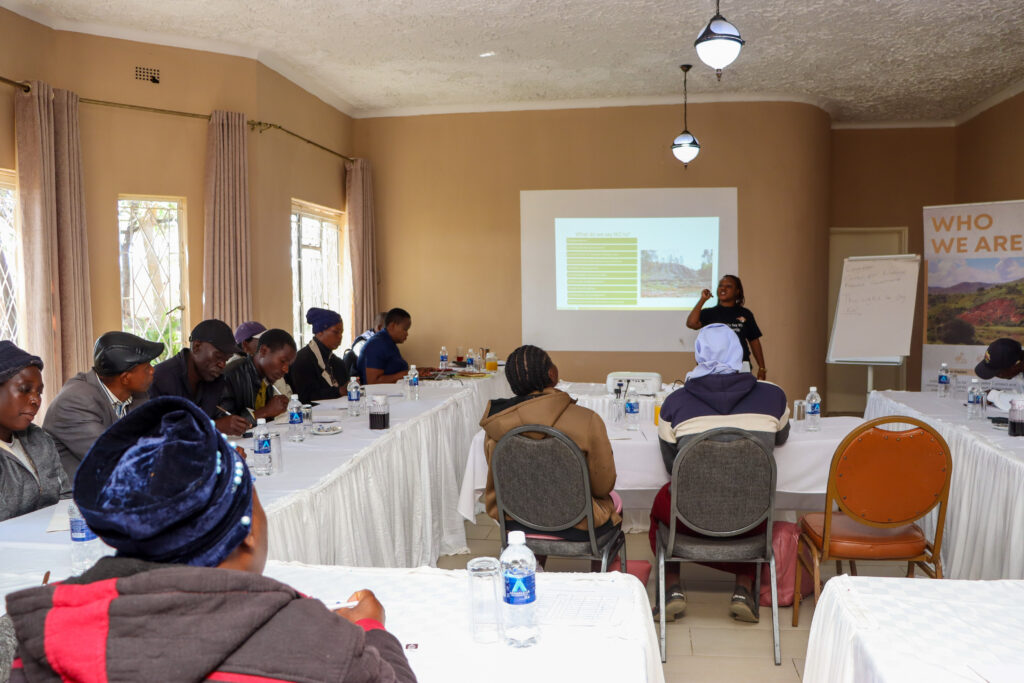
On the 14th of September 2023, the Centre for Natural Resource Governance (CNRG) hosted the Dzikamidzi villagers of Shurugwi for a Right to Say No workshop. During previous engagements, the village was identified as a community that is currently facing displacement due to the UNKI mine expansion.
Under the Right to Say No Project with financial support from the Brot fur die Welt (Bread for the World) CNRG is working with the Shurugwi community to build community capacity to resist destructive mining practices.
Section 13 (2) of the constitution says communities are supposed to benefit from the extraction of resources in their community which is not what is obtaining for many communities in the country, including Shurugwi.
During previous training on the Right to Say No, the communities were capacitated on the tenets and principles of the Right2SayNO campaign so that they assert their rights to turn down or reject projects that are imposed on them, particularly extractive projects that affect their right to land, water, forests and rivers.
The #Right2SayNO reasserts the right of communities to say YES to models of development or activities which advance their human security and dignity.
The Dzikamidzi village of ward 19 was identified as a community that is currently facing displacement to make room for the UNKI mine’s expansion which is going to affect Chironde Mountain which is surrounded by 21 houses. UNKI’s expansion into the area has the potential to infringe on the community’s right to a clean and safe environment.
To date, Unki has blasted the mountain on two separate occasions (4 September 2021 and 7 September 2023).
According to the local community, this is causing massive sand and dust storms to flow into the village.
Following the capacity-building workshop held in July by CNRG, the community has been able to approach UNKI and advocate for the blasting to stop. The trained villagers cited that they have not given consent for these operations and that they have a right to exercise their land rights.
In response to this, UNKI mine has called for dialogue with the Dzikamidzi village to
Negotiate a way forward.
Rural communities have always been the burden carriers of the impact of mining despite not benefiting significantly from these activities. Often, they are exposed to pollution, land degradation, displacement and even loss of ancestral lands to mining operations.
Mining is increasing the vulnerability of rural and peri-urban communities. The involvement of some powerful government officials in the criminal networks looting Zimbabwe’s natural resources has resulted in mining operations being accompanied by intimidation, repression and many forms of human rights violations in communities.
These violations need to be resisted by the affected communities through the Right2SayNO campaign. CNRG is right there in the affected communities, building power from below to resist dispossession by extractive industries.
Anchored on the global rights framework, the United Nations Declaration on the Rights of Indigenous Peoples, particularly article 10 which states that no relocation shall take place without the free, prior, and informed consent of the indigenous peoples concerned and after agreement on just and fair compensation and, where possible, with the option of return, the campaign will see communities from across Zimbabwe self-organising and mobilising in defence of their rights.
CNRG Climate Justice Coordinator Rachel Jambo said the event was a success based on the set objective of strengthening grassroot movements to demand environmental justice and developmental agenda financed by their local natural resources.
“The meeting provided a platform for the community to air their concerns which will be written formally to the mining company. The meeting also enlightened the community and provided an opportunity for members to see that they can hold duty bearers to account. This experience will be important for the R2SN project,” said Jambo.