
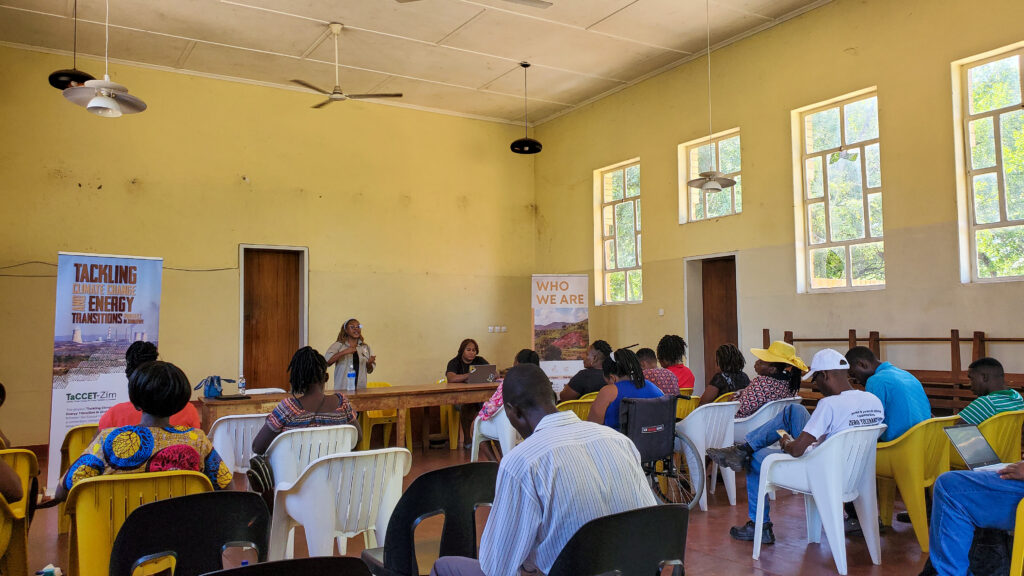
As the world celebrated the first-ever International Day of Clean Energy, the Centre for Natural Resources Governance (CNRG) convened a multi-stakeholder engagement in Hwange on the 26th of January 2024. The exchange sought to provide a platform to exchange knowledge and perspectives on mining and climate justice.
The multi-stakeholder engagement brought together government department representatives from the Ministry of Women Affairs, Community, Small and Medium Enterprise Development, the District Administrators Officer, mining companies, and Hwange community members who live near coal mines.
The objective of the workshop was to create a discussion platform for evidence-based sharing on net-zero carbon futures, whilst advancing economic and social policies in Zimbabwe that are social, climate, and gender-equitable.
Speaking to THE WEEKLY on the sidelines, CNRG’s Climate Justice Coordinator Rachel Jambo told the publication that the workshop was meant to localize and bring the Just Transition discourse to the locals.
“Hwange town’s voice in the call for a just energy transition has yet to be heard and amplified. The community is yet to locate itself in the just transition discourse. Climate justice calls for addressing these inequities and ensuring a just transition to a sustainable future for all are imminent and the stakeholder engagement was aimed at bridging the gap while at the same time imparting the knowledge of Just Transition to the Hwange stakeholders,” said Jambo.
Historically, the extraction and processing of coal have caused significant environmental and social implications. Many local ecosystems, water resources, and communities in Hwange have been on the receiving end of the disproportionate negative impact of coal mining for decades, with increased marginalization of indigenous communities, loss of land rights, environmental degradation, and human rights violations which include hazardous environments.
Coal mining has long been a significant industry in Zimbabwe, providing employment opportunities and contributing to the country’s energy needs. However, as the world transitions towards cleaner and more sustainable energy sources, Zimbabwe must consider a just transition away from coal mining.
The stakeholder engagement was also aimed at bringing together stakeholders and encouraging them to work together in policy formulation to make sure that they bring together unified concerns.
“A just transition requires collaboration between all the stakeholders involved that is the government, mining companies, and local communities. Our quest is to provide such platforms so that all the stakeholders work together to develop policies, provide financial support, and create a supportive regulatory framework for the transition. This collaboration will go a long way in ensuring that the concerns and aspirations of all parties involved are considered,” said Tracy Mutowekuziva CNRG Deputy Programmes Manager.