
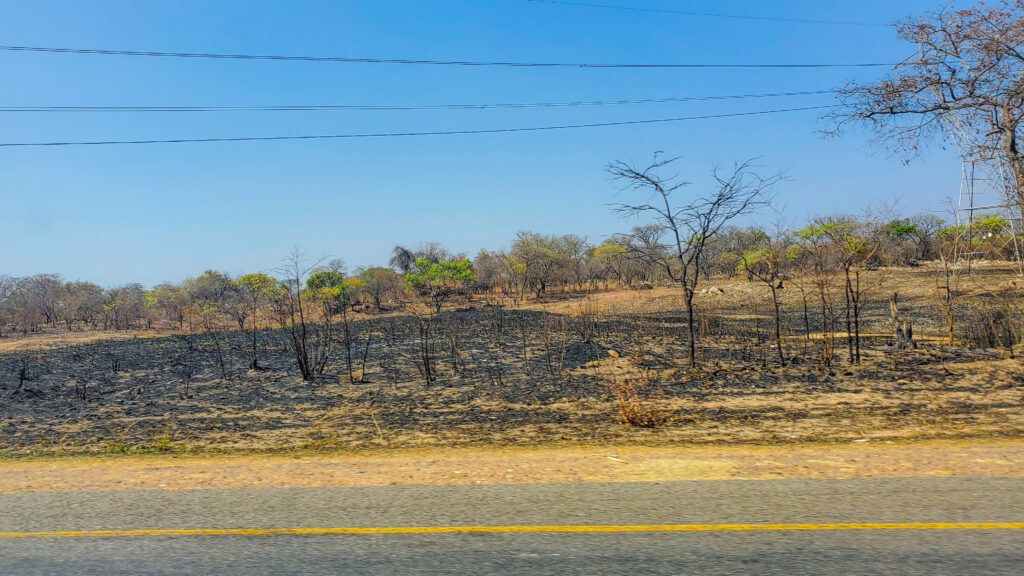
CNRG has called for interventions in the current fire season which will go until October in order to preserve Zimbabwe’s timber resources.
For many years, veld fires have presented a serious threat to Zimbabwe’s timber resources.
These fires, which are frequently brought on by both natural and human causes, have had terrible effects on the nation’s environment, economy, and communities.
The impact of veld fires on Zimbabwe’s forestry resources is devastating and CNRG is calling for effective prevention and management techniques.
Speaking to the Weekly, CNRG Project Officer for Matabeleland Ndaizivei Garura said:
“The frequency and severity of veld fires has increased recently in Zimbabwe. This can be attributed to various factors, including climate change and reckless human activities. As a result, vast areas of forests, woodlands, and grasslands have been destroyed, leading to significant ecological imbalances.”
“Veld fires have far-reaching environmental consequences. They destroy valuable forests and ecosystems consisting of diverse flora and fauna thereby disrupting the delicate balance of these habitats. Wildlife populations suffer as their food sources and shelter are destroyed, leading to a decline in biodiversity. Additionally, the fires release tons of carbon dioxide into the atmosphere, exacerbating climate change and triggering further environmental degradation.”
CNRG notes with concern that the destruction caused by veld fires has severe economic implications for Zimbabwe which therefore must be avoided.
“The forestry sector contributes significantly to the country’s economy through timber production, non-timber forest resources, and tourism. With the loss of these resources, communities relying on forestry-related activities, such as logging, crafting, and ecotourism, are left stranded, leading to economic decline and unemployment,” said Garura.
The organisation has over the years warned that the fires pose a direct threat to the livelihoods of rural communities in Zimbabwe, who heavily depend on forests for food, pastures, firewood, and herbs, hence the need for caution in this fire season.
“With the destruction of these natural resources, communities face food insecurity, increased poverty, and an increased burden on women and children who often bear the responsibility of gathering alternative resources,” added Garura.
The prevalence of veld fires in Zimbabwe is partly due to inadequate prevention and management strategies. Limited resources, weak law enforcement, and a lack of awareness among local communities have contributed to the ongoing problem. Strengthening fire prevention efforts, investing in firefighting equipment, and educating communities on fire safety practices are crucial steps towards mitigating the impact of veld fires.
Addressing the issue of veld fires requires a collaborative effort between the government, non-governmental organizations (NGOs), and local communities. Efforts should focus on developing early warning systems, training communities in fire management techniques, and implementing sustainable land-use practices to prevent fire outbreaks. Traditional leaders can also play a pivotal role in fire prevention.
The destruction caused by veld fires in Zimbabwe is an urgent issue that requires immediate attention.
“Protecting the country’s forestry resources is vital for maintaining biodiversity, preserving livelihoods, and sustaining economic growth. By implementing robust prevention and management strategies, raising awareness, and fostering community involvement, Zimbabwe can minimize the impact of veld fires and safeguard its forestry resources for future generations,” said Garura.