

By Staff Correspondent
In a groundbreaking move to strengthen the bridge between tradition and gender justice, the Centre for Natural Resource Governance (CNRG), in collaboration with the Zimbabwe Gender Commission (ZGC), convened a capacity-building workshop for traditional leaders in Manicaland Province. The initiative was not only timely, it was transformative.
When the narrative of gender equality was first introduced, particularly in the wake of the landmark 1995 Beijing Conference, it was a necessary and progressive shift. However, its early local proponents, perhaps in the zeal to fast-track women’s empowerment, inadvertently drove a wedge in communities.
For many, the push was perceived not as inclusion, but intrusion. The resulting tension left the impression that gender equality conflicted with long-standing cultural and familial values. Traditional leaders have since been vocal in clarifying that they are committed to entrenching gender equality principles, but not at the expense of the moral and social fabric of their communities. For them, the preservation of family values is paramount, and they insist that equality need not be its undoing.
It was precisely this gap between perception and principle that the Manicaland workshop sought to close.
The training was warmly received by chiefs, who acknowledged that gender equality and cultural values are not mutually exclusive. As Chief Mutasa candidly noted, “Traditional leaders have no objection to equal opportunities for all genders. But we must balance this with our values on family structure.” He went on to highlight glaring injustices, especially in inheritance and land access, that continue to disadvantage women. In his own words: “A husband and wife jointly acquire property, but when they separate, the woman often walks away empty-handed. That must change.”
His views captured the workshop’s underlying message: culture can evolve, and equality can coexist with tradition.
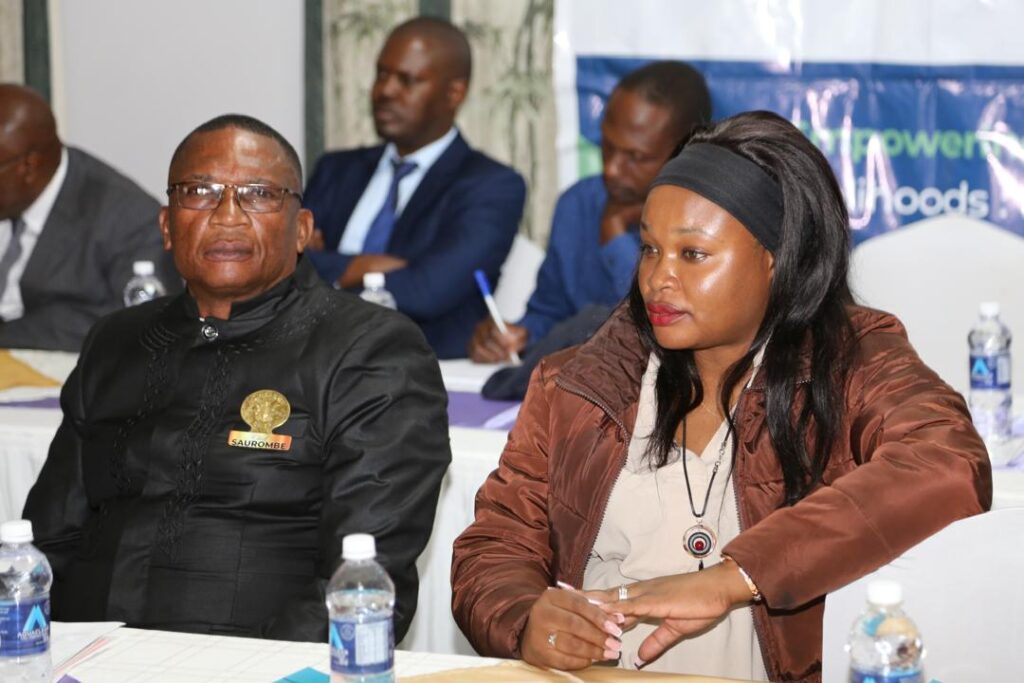
Chief Suarombe follows proceedings during the Manicaland Chiefs Indaba
ZGC Vice-Chairperson Obert Machalaga called on chiefs to take the lead in promoting gender parity. “Traditional leaders must ensure that constitutional laws on gender equality are upheld. They should investigate rights abuses and refer serious Gender-Based Violence cases to the courts. Your voice is crucial in shaping new norms that align with both our Constitution and our values,” he said.
The Minister of State for Manicaland Provincial Affairs and Devolution, who was represented by Permanent Secretary Abiot Maronge, echoed this sentiment. “Chiefs are central to community development. Their involvement in promoting gender-sensitive values is vital, especially on matters like land rights, inheritance, and violence,” he said.
The workshop also highlighted the need for inclusive community dialogue. For too long, gender equality has been introduced with minimal engagement of cultural authorities, leading to suspicion and resistance. The training provided a platform for traditional leaders to not only learn but to contribute, to shape a version of gender equality that resonates with local realities and preserves communal harmony.
Yes, Zimbabwe remains a patriarchal society. But it is also one where attitudes are shifting. Chiefs, headmen, and village leaders are beginning to see that empowering women and girls is not a betrayal of tradition—it is a strengthening of it. By equipping traditional leaders with legal and policy tools, the workshop created new pathways for localised change that align with national and constitutional aspirations.
Crucially, it reasserted what should never have been in doubt: gender justice is not a foreign concept. It is rooted in fairness, dignity, and ubuntu.

Participants from civil society at the groundbreaking capacity-building workshop on gender for traditional leaders
The CNRG remains committed to ensuring that efforts to advance gender equality through its project, supported by Amplify Change, that seeks to address violence against women. The prevalence of gender-based violence, including sexual violence in mining communities, is a rising scourge that requires collaborative efforts and cannot be carried out in opposition to tradition, but in partnership with it.
With traditional leaders stepping forward as champions of this cause, the vision of a more inclusive, equitable Zimbabwe draws ever closer.
The future, it seems, is both cultural and equal.