By Tracy Mutowekuziva
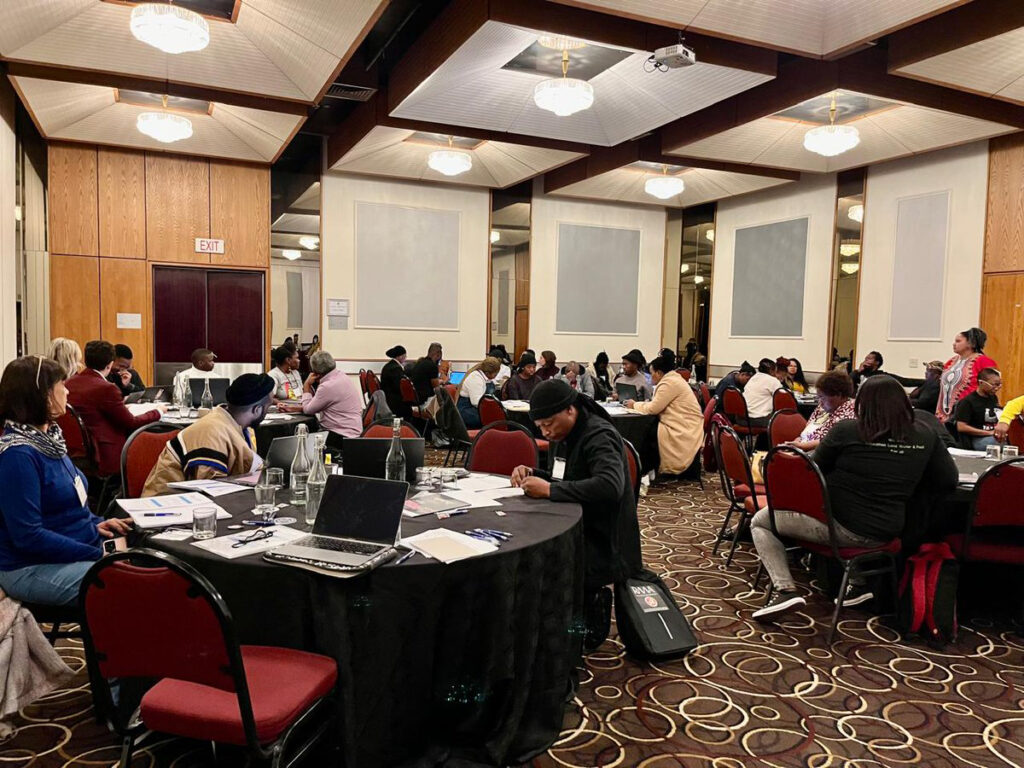
The Centre for Natural Resource Governance (CNRG) last week participated in the Regional Binding Treaty Indaba in Johannesburg. The active participation of African civil society organizations is crucial in ensuring that the final agreement reflects the priorities and perspectives of the continent’s mining-affected populations.
Watchdog organizations like CNRG play a vital role in amplifying voices of local communities and advocating for legally binding accountability mechanisms. African civil society groups have an opportunity to strategize and build a unified vision for how the treaty can benefit mining communities. Their engagement in the treaty negotiation process will be pivotal in empowering mining-affected communities across the continent.
In 2014, the United Nations Human Rights Council established an open-ended intergovernmental working group on transnational corporations (TNCs) and other business enterprises regarding human rights (OEIGWG). The working group has put forward a proposal for a binding treaty to hold TNCs accountable for human rights abuses along their international supply chains. It consists of representatives from multiple countries holding seats on the Human Rights Council.
This initiative has significant potential for global impact in addressing human rights violations by transnational companies. It will be unlike the UN’s current voluntary guidelines on business and human rights. This treaty would be binding under international law, making large companies responsible for human rights abuses in their supply chains.
Currently, legal cases involving human rights abuses in supply chains often face obstacles, as companies can, and often, transfer cases to countries or jurisdictions, requiring the legal process to start over. It sets cumbersome trial and legal process, often frustrating litigating parties. If put in force the treaty could allow for lawsuits against companies engaging in harmful practices in developing countries to be filed in the companies’ home countries (e.g., suing a US company in a US court for human rights abuses in Zimbabwe).
The UN Guiding Principles on Business and Human Rights, established in 2011, represented a landmark step towards holding corporations accountable for their human rights impacts. However, many have criticized the Guiding Principles voluntary basis as a weakness for and a resultant lack of necessary enforcement mechanisms to compel companies to change their behaviour. In contrast, the proposed binding treaty on mining communities aims to go further, establishing legally binding obligations for multinational mining companies to respect the rights of affected populations.
Moreover, the treaty also aims to establish community consultation, environmental protection, and access to remedies as legal requirements. This shift in power from corporate interests to affected communities is intended to safeguard human rights and promote sustainable mining practices worldwide through legally enforceable standards and dispute resolution procedures. Advocates for responsible mining hope that the treaty will be more effective than the voluntary Guiding Principles in preventing human rights abuses.
Some countries, like France and Germany, have introduced laws that mandate human rights due diligence. Other legislative efforts are also in progress, such as the recent EU Corporate Sustainability Due Diligence Directive (CSDDD), Bill of Law 572 in Brazil, and the African Commission resolution advocating for regional regulations to address business-related human rights violations in Africa, particularly focusing on marginalized and vulnerable populations. The suggested treaty could serve as a vital additional tool, promoting corporate accountability and ensuring effective access to remedies for victims of corporate human rights abuses globally. Holding multinational companies (MNCs) accountable for their actions can be challenging for states, especially in developing countries, due to a few key reasons:
- I. Regulatory Fragmentation and Jurisdictional Challenges:
MNCs can operate across multiple jurisdictions, each with its own laws and enforcement mechanisms. This makes it difficult for any single state to regulate the company’s activities comprehensively. Additionally, multinational companies can exploit regulatory loopholes and differences between national laws to avoid responsibility.
- Resource and Capacity Constraints of Developing Countries:
Many developing countries lack the financial, technical, and institutional resources to effectively monitor, investigate, and prosecute large MNCs for their wrongdoings. Regulatory and judicial bodies in these countries may be underfunded, understaffed, and susceptible to corruption, reducing their ability to hold MNCs accountable.
- Asymmetric Power Dynamics and Unequal Bargaining Power:
MNCs often have significant economic and political influence, which allows them to pressure developing country governments and shape regulatory frameworks to their advantage. Developing countries may be hesitant to take aggressive enforcement actions against MNCs for fear of losing much-needed investment, trade, or diplomatic ties.
- Insufficient International Coordination and Enforcement Mechanisms:
There is a lack of a robust, harmonized global framework for regulating MNCs and holding them accountable across jurisdictions. Existing international laws and treaties often lack the necessary teeth or enforcement mechanisms to compel MNCs to change their behaviour or provide effective remedies for affected communities.
At its core, the agreement establishes a comprehensive framework of rights and protections for those living in mining-affected areas. This includes guaranteed access to clean water and air, the right to provide or withhold “free, prior, and informed consent” for new mining projects, and enforceable mechanisms to hold companies and governments accountable for environmental and human rights abuses.
Importantly, the treaty also mandates the equitable sharing of mining revenues with local populations, ensuring that the wealth extracted from their lands translates into tangible improvements in their quality of life. This could manifest in the form of investments in public infrastructure, healthcare, education, and sustainable economic development. Corporate social investment is vital for uplifting mining communities that have long been trapped in cycles of poverty and marginalization.
The ratification of this treaty represents a watershed moment, not just for mining communities, but for the global pursuit of environmental and social justice. By enshrining the rights and needs of those on the frontlines, it sends a clear signal that the era of extractive industries operating with impunity is coming to an end. Instead, a new paradigm is emerging – one where the voices of local stakeholders are elevated, where sustainability and shared prosperity are prioritized, and where the immense human toll of mining is finally acknowledged and addressed.
Of course, the work is far from over. Implementing and enforcing the treaty’s provisions will require sustained political will, robust mechanisms of accountability, and a fundamental shift in the power dynamics that have long favoured multinational corporations over vulnerable populations. But for the first time, mining communities around the world have a tool – a legally binding international agreement – to defend their rights and secure a more equitable future.
In an era of growing resource scarcity and environmental degradation, the significance of this treaty cannot be overstated. It represents a vital step toward a world where the benefits of mining are truly shared, where the rights of local populations are protected, and where the industries that shape, our global economy are held to the highest standards of social and environmental responsibility. The journey ahead may be cumbersome, but with this landmark agreement in place, mining communities can finally aspire to a future of justice, dignity, and sustainable prosperity.