

With vast reserves of lithium, nickel, and manganese, African nations like South Africa, Zimbabwe, the Democratic Republic of Congo (DRC) and Burkina Faso are the new frontiers of geopolitical contestation, turning mineral wealth into diplomatic leverage in the global race to net zero.
By Donald Nyarota
On a continent long defined by its colonial scars and contested borders, a new map is quietly emerging — one drawn not by empire but by critical minerals. From the lithium-rich hills of Zimbabwe to the chrome belts of South Africa, the manganese fields of Burkina Faso, and conflict-torn sprawling plateaus of the DRC, Africa’s critical minerals are redrawing the contours of global power.
As the world accelerates toward a net-zero future, the metals required to power electric vehicles, battery storage systems, and green hydrogen are no longer just commodities — they are strategic assets. And Africa, with its staggering reserves, has become the geopolitical arena of contestation where the energy transition meets raw diplomatic muscle.
Consider the numbers:
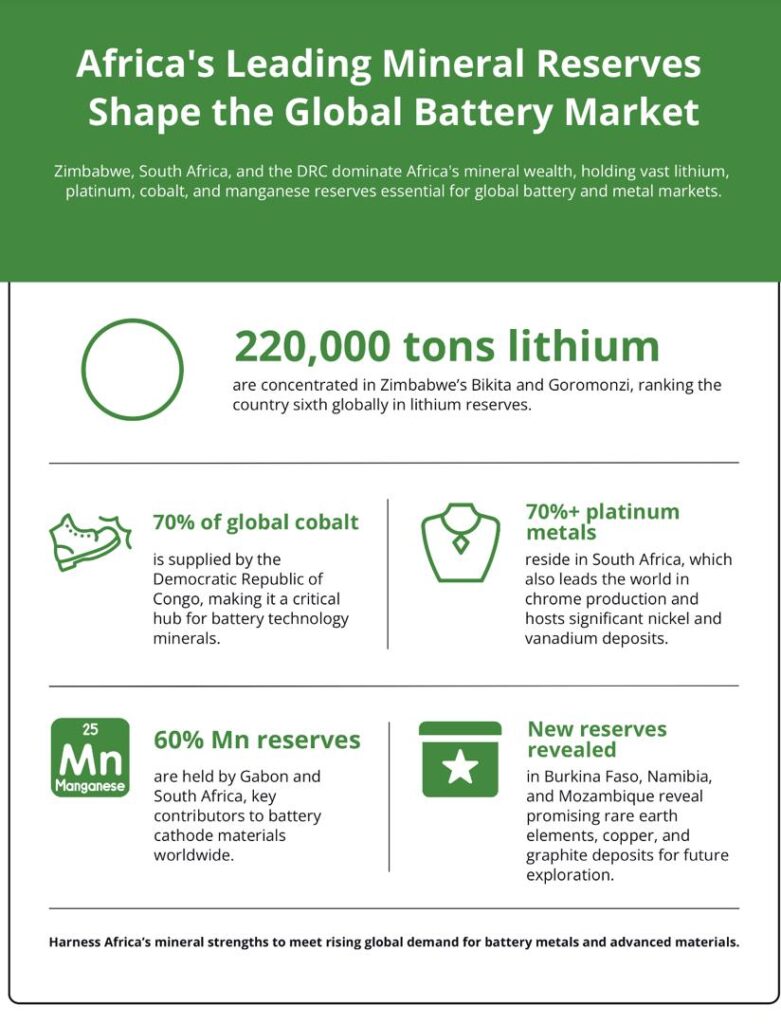
•Zimbabwe holds the world’s sixth-largest lithium reserves, with over 220,000 metric tons of known deposits, concentrated in places like Bikita and Goromonzi.
•South Africa is the world’s largest producer of chrome and hosts more than 70% of global platinum group metal (PGM) reserves, including vast deposits of nickel and vanadium.
•Gabon and South Africa together account for over 60% of the world’s manganese reserves, essential for battery cathodes.
•The Democratic Republic of Congo, a regional linchpin, supplies over 70% of global cobalt.
•New exploration in Burkina Faso, Namibia, and Mozambique is unveiling commercially viable reserves of rare earth elements, copper, and graphite.
These figures have transformed Africa from a passive player in global energy markets to a decisive force in shaping their future. But it’s not just about what lies underground — it’s about how leaders above ground are beginning to wield that power.
Nowhere was this shift more apparent than in President Cyril Ramaphosa’s carefully orchestrated diplomatic encounter at the White House with former U.S. President Donald Trump. At a time when relations between Pretoria and Washington had chilled over incendiary claims of anti-white violence, Ramaphosa executed what Zimbabwean analyst Farai Maguwu called “a diplomatic masterstroke.”
According to Maguwu, President Ramaphosa’s diplomatic approach with Trump was strategic. Rather than confrontation, Ramaphosa used soft power, invoking South Africa’s post-apartheid reconciliation and Nelson Mandela’s legacy.
And then, in a strategic pivot, he made his pitch: “We have what you want to fuel the growth of your economy… we have that on offer, including rare earths.”
This wasn’t just charm. It was calculated realpolitik. By positioning South Africa’s critical minerals as a solution to America’s industrial anxieties, Ramaphosa didn’t merely repair strained relations — he elevated his nation’s economic relevance on the world stage.
“Africa’s minerals are no longer just about trade — they are about leverage,” Maguwu noted. “Ramaphosa showed that by reading the economic pulse of his counterpart, he could turn raw materials into political capital.”
Observers now point to this calculated move as emblematic of a broader trend. From Burkina Faso’s resource nationalism to Zimbabwe’s strategic pivot eastward, African leaders are no longer mere recipients of foreign policy. They are shapers of it — using their mineral wealth not just for contracts, but for leverage.
Other nations are taking note. Zimbabwe, long on the margins of international finance, has banned the export of raw lithium to force foreign companies to invest in local processing. The move has drawn in Chinese, Indian, and European investors, while sparking debate over transparency and community benefits.
In Burkina Faso, recent military-led governments have cooled relations with the West and signed new mining deals with Russian and Turkish interests — deals often veiled in secrecy but unmistakably aimed at maximizing strategic independence.
Meanwhile, South Africa is reshaping its industrial policy around its mineral endowments. A new hydrogen strategy aims to capitalize on the country’s vast platinum reserves, while partnerships with Germany, Japan, and the U.S. focus on downstream development of batteries and green fuels.
Yet with opportunity comes risk. The so-called “green gold rush” could easily repeat the mistakes of the past — extractive deals that enrich elites and impoverish communities, environmental degradation, and new forms of external dependency.
Civil society groups across the continent are pushing back, calling for transparency, fair taxation, and local ownership. “The world wants our minerals, but we want our future,” says Sydney Chisi, a climate justice advocate and director of Reyna Trust, “We can’t power someone else’s clean energy while polluting our soil and stealing our children’s opportunities.
“We need to look at the geopolitical issues around the critical minerals, who is determining the global market prices. At what point is the criticality of minerals defined?”
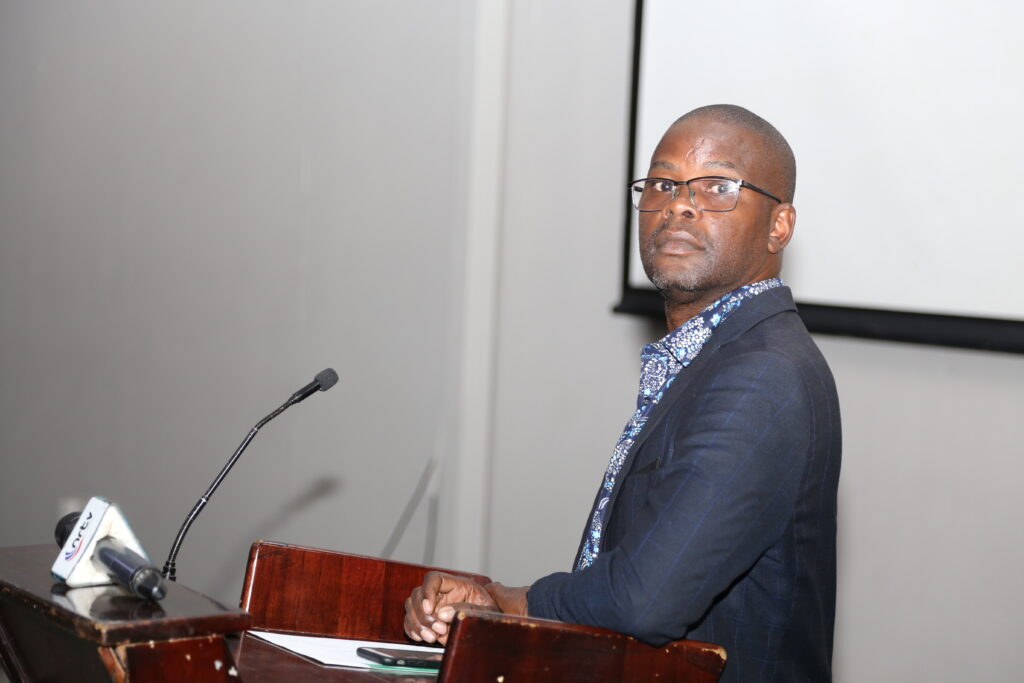
Mr Sydney Chisi, climate justice activist and director of Reyna Trust
Chisi warned of the dangers of African nations being reactionary when geopolitical interests shape the trajectory of critical minerals exploitation, with global powers like China shaping discourse.
Still, the tectonic shift is undeniable. Africa can no longer simply be a warehouse for the world’s raw materials. It is becoming a center of diplomatic contestation, negotiation, and — increasingly — assertion.
As the global race to net zero continues, African leaders like President Ramaphosa are showing that in this new era, diplomacy begins in the mine — but doesn’t end there.