
By Staff Reporter
Promoted as a lifeline for Africa’s climate and development finance needs, the African Carbon Markets Initiative (ACMI) is facing growing resistance. Critics say it’s not a solution but a sophisticated greenwashing scheme that serves fossil fuel companies while jeopardising Africa’s sovereignty and survival. Zimbabwe, meanwhile, is charting its cautious path.
In the corridors of global climate negotiations, carbon markets have become the new currency of climate action. But in Africa, a powerful counter-narrative is building—and it’s calling out the African Carbon Markets Initiative (ACMI) for what many now believe it truly is: a dangerous distraction from the continent’s real climate and development priorities.
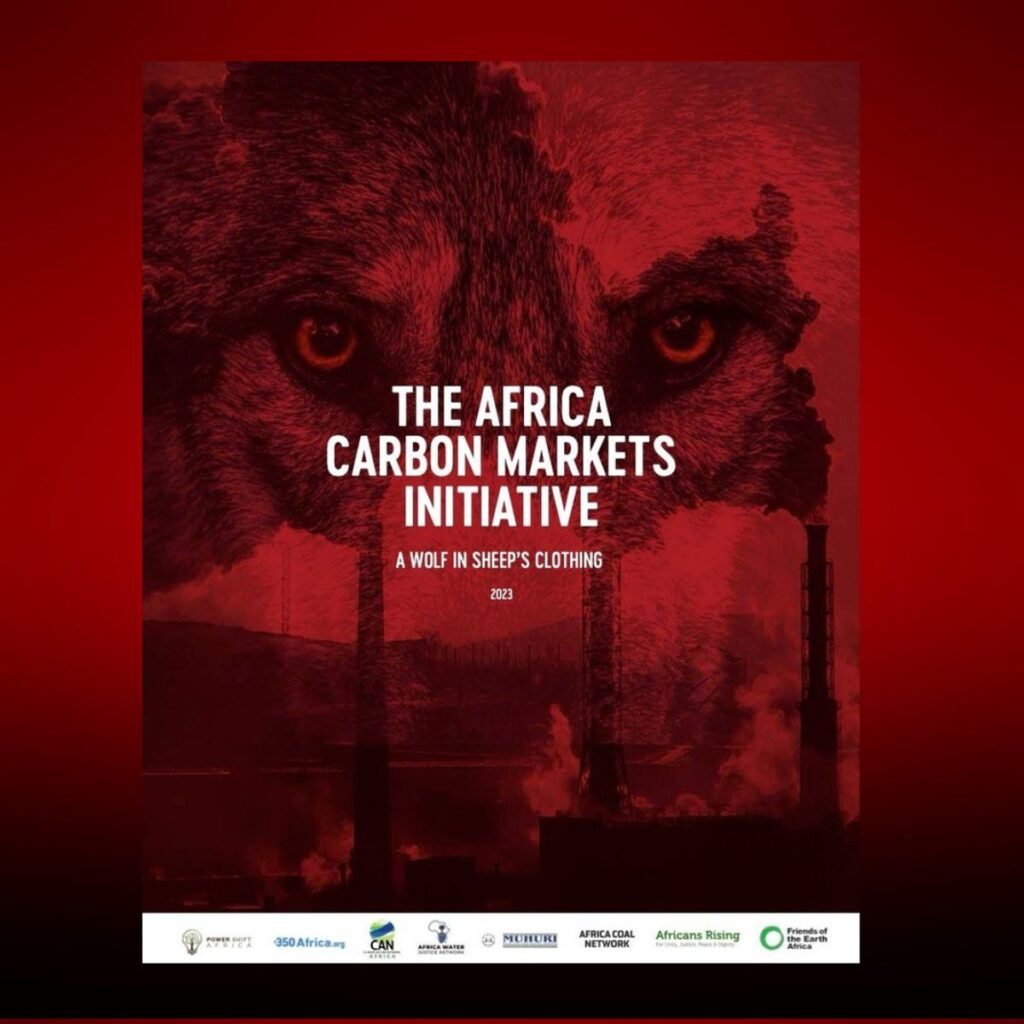
A report by Powershift Africa, The Africa carbon markets initiative: A wolf in sheep’s clothing, states that the concept of carbon offsetting is fundamentally flawed, as it enables polluters to purchase indulgences rather than reducing emissions, effectively shifting the burden of their guilt to Africa.
“Carbon credits are, essentially, pollution permits – an imaginary commodity created to benefit the wealthy, not the climate. They are a financialisaton of African nature and the climate crisis, dealing in an imaginary commodity of tonnes of carbon ‘saved’. Africa Carbon Markets Initiative claims its purpose is to create a market for a ‘high-value export commodity’. In truth, however, there are two biggest winners from carbon markets.”
Launched with high hopes at COP27 in Sharm El-Sheikh, ACMI has been marketed as a transformative tool to unlock billions in green investment, create jobs, and fund climate adaptation. But a damning new civil society report warns that this initiative may do more harm than good, describing it as “a wolf in sheep’s clothing.”
At stake are not only Africa’s climate goals but also its land, livelihoods, and autonomy.
The Dirty Secret Behind Carbon Credits
At the heart of ACMI lies a controversial premise: that carbon emissions from major polluters in the Global North can be “offset” by investing in carbon-saving projects, like tree planting or renewable energy, in Africa. These so-called carbon credits are then bought and sold in international markets, allowing companies to claim “net zero” emissions without reducing their own output.
But experts say this is little more than climate accounting trickery.
The concept of carbon offsetting is fundamentally flawed, as it enables polluters to purchase indulgences rather than reducing emissions, effectively shifting the burden of their guilt to Africa.
According to the report, ACMI’s goal of generating 1.5 to 2.5 gigatonnes of carbon credits annually by 2050 could enable emissions far beyond what the planet can safely absorb—equivalent to, or even greater than, the total annual emissions of the African continent.
Zimbabwe’s Regulatory Gamble
Not all African nations are blindly embracing the ACMI model. In 2025, Zimbabwe introduced Statutory Instrument (S.I.) 48, establishing the Zimbabwe Carbon Markets Authority (ZiCMA) and a National Grievance and Redress Mechanism (NGRM). The move aims to regulate carbon trading through a national lens, creating a more transparent, accountable framework aligned with domestic development goals and international obligations.
ZiCMA is tasked with overseeing all carbon market transactions in the country, ensuring that revenues from offsets are not only traceable but also fairly shared with local communities. The NGRM provides a platform for affected people to challenge or appeal harmful carbon projects—an innovation largely absents in many voluntary carbon schemes across the continent.
While Zimbabwe’s approach signals a desire to avoid exploitative deals and regulatory chaos, critics caution that no framework, no matter how well-written, can neutralise the fundamental flaws of carbon offsetting.
Climate governance experts welcome countries’ efforts to assert control but raise a critical concern: whether Africa’s participation in carbon markets is justified, given that these markets may perpetuate delayed emissions reductions in other regions.
Green Gold or Green Grabs?
The promises of green jobs and economic development are central to ACMI’s public messaging. Yet the report questions these claims, pointing to inflated projections and vague methodologies.
“Job creation statistics are being used to legitimise a market that benefits fossil fuel companies and speculative brokers far more than African workers,” the report argues.
Worse, the initiative risks repeating the land dispossession of past centuries—this time in the name of climate action. Large-scale tree planting and “nature-based solutions” require vast tracts of land, often displacing Indigenous communities, farmers, and pastoralists who depend on it for survival.
“We’re seeing the rise of a new form of colonialism,” says Stanley Mugomeza, Centre for Natural Resource Governance (CNRG) climate change officer. “Only now, it’s cloaked in green. This is not about protecting the planet, it’s about protecting profits.”
Fake Fixes and Double Counting
The report also raises alarm over the flawed science underpinning ACMI’s methodologies. One of the most glaring issues is the assumption that fossil carbon—stored underground for millions of years—can be offset by planting trees or conserving existing forests, which may release carbon back into the atmosphere within decades due to fire, disease, or deforestation.
It also highlights the double counting problem: the same tonne of “saved” carbon is often counted toward both the host country’s climate targets and those of the company purchasing the credit.
“This is not just bad accounting—it’s climate fraud,” the report states bluntly.
Africa Must Say No
For critics of ACMI, the way forward is clear: reject the carbon markets trap and push for climate finance that is unconditional, reparative, and aligned with African priorities.
“Africa should not be forced to sell its forests, lands, and people’s rights to pay for a crisis it did not cause,” says Mugomeza. “We need real emissions reductions from the polluters, not creative schemes to let them off the hook.”
Instead of turning African nature into a financial commodity, the report urges governments to invest in community-owned renewable energy, agroecology, and climate adaptation measures that centre human rights and ecological justice.
The Bottom Line
As world leaders gear up for COP29, pressure is mounting on African governments to take a stand. The carbon market debate is not just a technical or financial issue—it’s a question of sovereignty, justice, and survival.
If ACMI continues unchecked, it could lock the continent into a system where it sells fictional carbon savings while facing very real climate impacts. Countries like Zimbabwe may be attempting to localise and sanitise participation, but even the best regulations cannot fix a broken global system. Africa must decide: Will it lead with solutions rooted in justice, or be led into another trap dressed as opportunity?