
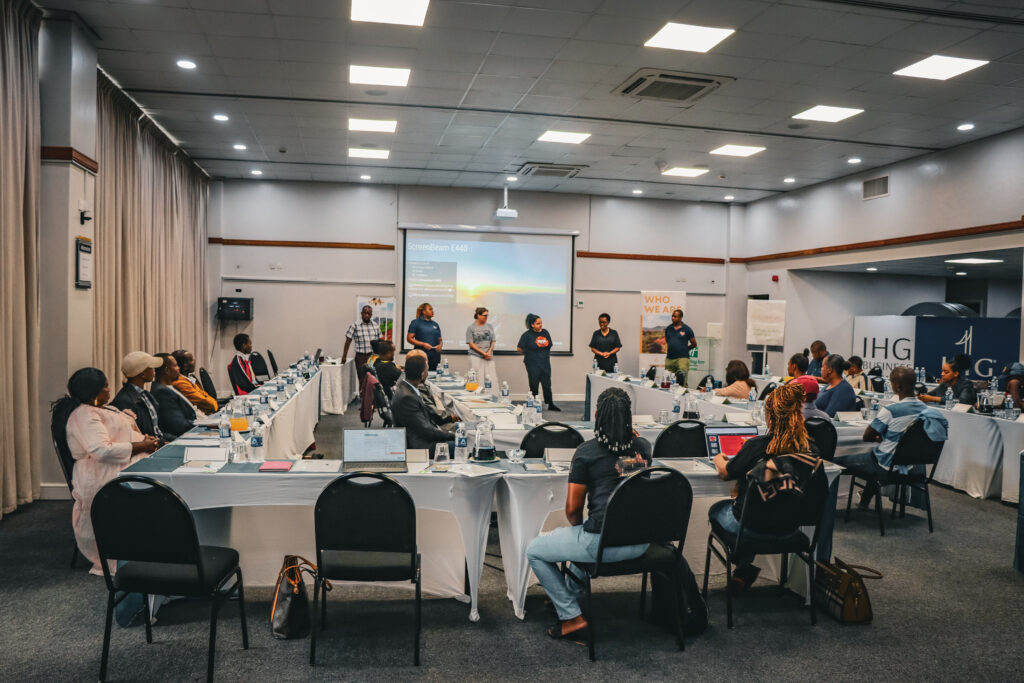
Center for Natural Resources Governance (CNRG) recently organized a learning and experience-sharing workshop in conjunction with the Alternative Information Development Centre (AIDC) based in South Africa to capacitate local mining communities in Penhalonga.
The workshop was aimed at supporting communities in resource-rich areas in enforcing their rights to consent mining projects and bringing solidarity to local communities with regional peers.
The workshop which ran under the Right to Say No brought communities from Penhalonga and Marange. The Right to Say No is a campaign that supports demands that communities be given the power to decide what kind of development takes place on their land.
These rights can only be supported when communities are given the ultimate power in deciding what kind of development takes place on their land, which includes the right to say no to extractive development.
Speaking during the sidelines of the workshop CNRG executive director Farai Maguwu said the campaign focuses on balancing the interests of communities, investors, and the government, by giving a strong voice to people living in resource-rich communities.
He said through sharing experiences and strategies on how to raise community voices to protect their rights and preserve their dignity.
“When these irresponsible mining practices come it is imperative that the community must have a nonviolent response to this. Governments go to the highest bidder sometimes they serve the interests of the corporations the communities need to find their voice and resist so that the government carries the agenda of their people.

“Mining must happen in a manner that advances the local interests of the people and the national interest and also the investors, we want a win-win situation.
“It’s about communities shouting to the powers that be that we can’t breathe and we need political, and policy interventions to ensure that the dignity of the people and our communities are protected,” said Maguwu.
Penhalonga is a gold mining community in Manicaland province, where Metallon Corporation-owned Redwing Mine operates, is an area where such community rights are under threat. Redwing mine once a symbol of local prosperity, has become synonymous with death, its shafts ravaged by unregulated artisanal miners after facing viability challenges.
Resultantly, Redwing Mine fell into judicial management and contracted Prime Royal Africa (PRA) to set up mining syndicates and exploit shallow open pits (free digging) without undertaking the Environmental Impact Assessment (EIA) process.
CNRG together with local civic society members challenged this successfully and Prime Royal fraudulently transferred its tributary agreement of 132 mining claims in the area to Betterbrands Mining Company around 2019. Chaos has ensued with unregulated mining activities fronted by artisanal miners.
ZIMBABWE’S DISAPPEARING GOLD: The Case Of Mazowe And Penhalonga, a report by CNRG sheds more light on unregulated mining activities and illicit trade of gold from the area, that has resulted in fatalities of artisanal miners.
Rachel Jambo, CNRG lead on the Right to Say No Campaign said women in the grassroots movements are central in the campaign to counter the externalized costs of mining projects in the community.
Jambo said the campaign will reinvigorate local women and grassroots movements in the fight against unregulated mining practices and the destruction of the pristine environs of the Penhalonga community.
“Women are custodians of the land. They are the ones that engage in subsistence farming and when their entire landscape is destroyed they lose their entire livelihoods.
“Once they are not part of the conversation to protect the environment and the land it leads more vulnerable to further inequalities, food insecurities and it goes down to girls as well as they move further distances to fetch clean water as the sources are polluted by mining activities,” she said.
Similarly, South African community advocacy group Amadiba Crisis Committee (ACC) spokesperson Nonhle Mbuthuma says women are key in the fight against corporate excesses as they rarely compromise on livelihood issues.
“The role of women in the resistance in our struggle is very important because since we started this some men that we started with have been convinced that mining was good. No women was convinced that mining was good but Some men were even appointed to head BEE companies as directors but women resisted that this fight is about our children and our survival,” she said.