
Four years after Cyclone Idai destroyed parts of Southern Africa, with Zimbabwe’s eastern districts being the hardest hit, residents in Chimanimani are still traumatized by the devastating experiences they went through.
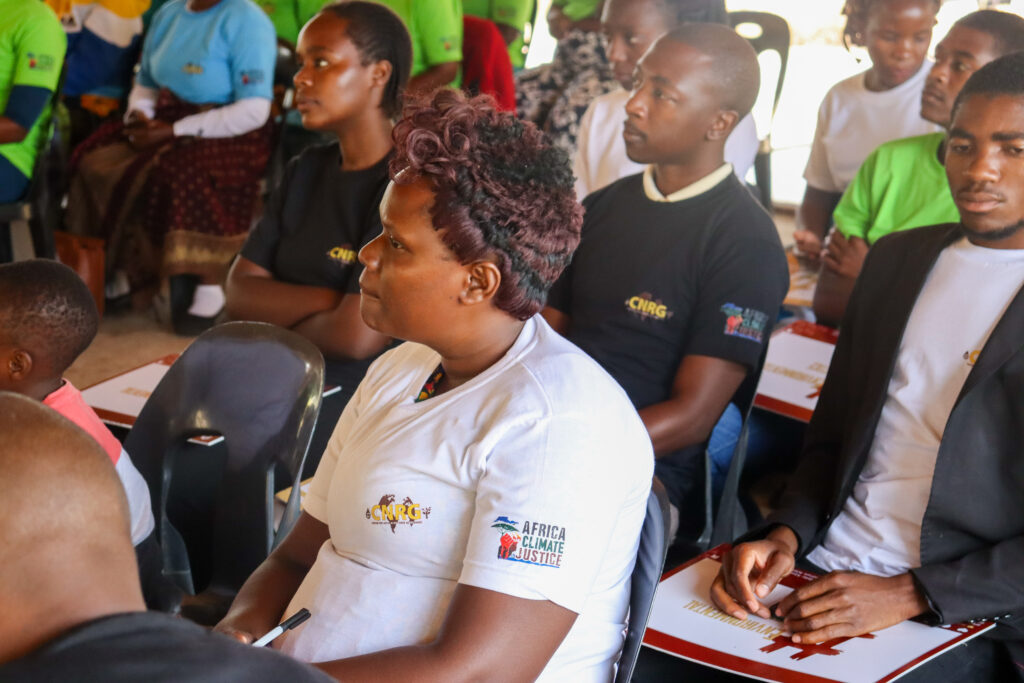
A group of women who recently attended a commemorative workshop in Mutare, about 270 kilometres from Harare, to remember those who died during Cyclone Idai, which devastated Chimanimani and Chipinge, lamented the inherent trauma and memories that still haunt them as a result of the disaster.
A 40-year-old widow who attended the commemoration organised by the Centre for Natural Resource Governance (CNRG) alongside its TaCCET partners in Mutare last week told THE WEEKLY that she’s still under trauma and each time it rains the trauma worsens as she recalls the experiences that saw her husband and son lose their lives.
Takemore Mufuya from Chimanimani Ward 21 Veremu Village, one of the survivors of Cyclone Idai, narrated a heart-wrenching story that plunged the audience into a sombre mood when she broke down into tears. Her experiences visibly showed the need for psycho-social support that is urgently needed for all survivors of Cyclone Idai in Chimanimani.
“The Cyclone somewhat shattered my sense of purpose in life, and I now even suffer from high blood pressure (hypertension). The cyclone took my husband and kid, who was six years old, and left me a widow. Being amnesic now has made me mentally unstable.
“I felt exposed after losing a breadwinner. The past four years have been challenging for me. I now have to care for my remaining two children, who I also feel have been damaged mentally as the cyclone left us homeless,” she said before breaking down. She had to be whisked away from the podium before finishing narrating her ordeal as emotions overwhelmed her. A fellow villager from Chimanimani who knew her story finished it on her behalf as part of the participants also silently wept as it was told.
In spite of the increasing severity of the climate crisis, there is no dedicated fund in Zimbabwe to support psychological programmes for the survivors of climate disasters such as Cyclone Idai.
Additionally, disadvantaged people did not receive adequate assistance to adapt. There has been no trauma healing for the survivors.
The communities still believe there is a gap since some individuals are still battling the trauma.
Hilda Tendeukai (23), from Ward 15 Ngangu Village, Chimanimani, the epicentre of the Cyclone, also expressed the need for psycho-social support.
“When Cyclone Idai devastated Chimanimani, I lost my best friend who was closer to me, and I was traumatized as a result.” We had shared dreams that were destroyed.
“The cyclone also washed away our livelihoods. Because of the storm, I missed a few weeks of school as a student, which reduced my studying time and negatively impacted my grades that year,” she said adding:
“Psychosocial support is still needed. We still fear any weather phenomenon that looks like it’s going to rain. We feel much must be done along that line for us to mentally recover from the effects of the cyclone disaster and move on with our lives,” she added. The workshop’s objective in Mutare was to develop a local community COP by revisiting Cyclone Idai and giving survivors a platform to share their experiences. TaCCET- ZIM and CNRG are holding dialogues with local communities on the relationship between climate change and the extraction of fossil fuels, as well as the negative effects this has on human health, the environment, and livelihoods.