
By Staff Reporter
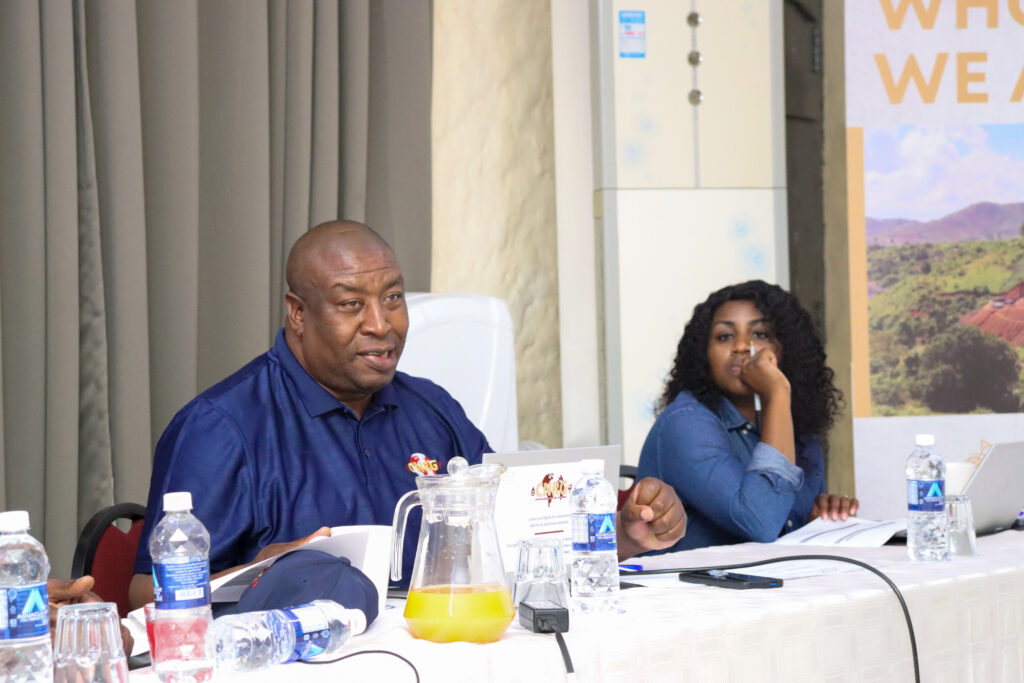
Centre for Natural Resource Governance, a research and advocacy civil society organization that works to promote citizen participation and good governance of natural resources for the ultimate benefit of communities that live in resource-rich areas, held a strategic review meeting to ponder on its 10-year struggle and reflect on possible future trajectories.
The organisation held its two-day strategic meeting in the resort town of Kariba between 8 and 11 August 2023.
Explaining the objectives of the meeting, CNRG’s head of programming George Nyamaropa highlighted that it was critical for the organisation to have a critical appraisal of its continuity and sustainability aspects.
“The objectives of the meeting were to assess our operating context as well as reflect on our value proposition and growth. The meeting was also necessitated by the need to map a way forward innovatively and explore scenario options of CNRG in carrying out our work beyond 2023,” he said.
Nyamaropa also led the CNRG staff in discussions to form fundraising strategies for the organisation in order to boost its sustainability.
The meeting reflected at length what it means to be CNRG and how the organisation has grown over the years.
Emerging opportunities for CNRG were also explored for the purposes of making the organisation relevant going forward.
A hired consultant took through CNRG staff on sessions that included reflecting on the impact of the organisation and reflection of strategies that plug gaps in operations while on the other hand cementing strengths.
The consultant also imparted knowledge on how CNRG can upscale its operations to achieve greater impact by using models developed by other local, regional and international organisations.
Communication and visibility strategies were also explored during the meeting and an improved financial synthesis of CNRG was put together.
Field and department officers reviewed progress on their various projects and strategised around how enhanced impact can be realised in future.
CNRG director Farai Maguwu gave an account on how mining has become the biggest economic activity ahead of agriculture – a development that saw the emergence of challenges for communities in areas affected by mining.
He promised that CNRG will thus work on pushing back the problems that has arisen due to emergence of mining as the biggest economic activity.
“The emergence of mining has resulted I rising inequality, resource plunder, erosion of good governance, environmental crimes and a culture of impunity. These are the problems that CNRG will now work hard to end,” he said.
Maguwu spoke at length on how the organisation can fulfil its mission billed on five pillars.
“Our five pillars of focus are gender and extractive which aims to improve safety for women and girls in communities affected by extractive activities.”
“We have the climate change pillar put together to build resilience and climate change adaptation capacity within communities affected by extractive industries in Zimbabwe,” he said.
“The third pillar is minerals resource governance which aims to promote transparency and accountability in the governance of mineral resources in Zimbabwe. We also have the Ecosystem pillar in which we aim to promote sustainable management and conservation of ecosystems for the benefit of local communities in Zimbabwe.”
The CNRG director explained that the land and water pillar is also going to be critical in the work of the organisation in the coming years.
“Our last pillar is the land and water one where we want to find ways of how best to promote equitable access to land and water resources for indigenous communities. Extractive Industries compete for land and water resources with host communities and this has created problems that we are working to end,” he said. He stated that apart from grabbing land and water, mining has proved to be an enclave economy that is not connected with local production systems, thereby creating poverty and food insecurity instead of producing wealth for the locals.
At the end of the meeting, teamwork dynamics were set and ways to resolve conflicts with a team crafted.