
By Donald Nyarota
Every year on March 21st, the world observes the International Day of Forests (IDF), a day dedicated to raising awareness about the invaluable role of forests in sustaining life on Earth. This year, under the theme “Forests and Foods,” the focus is on the crucial relationship between forests, food security, and livelihoods.
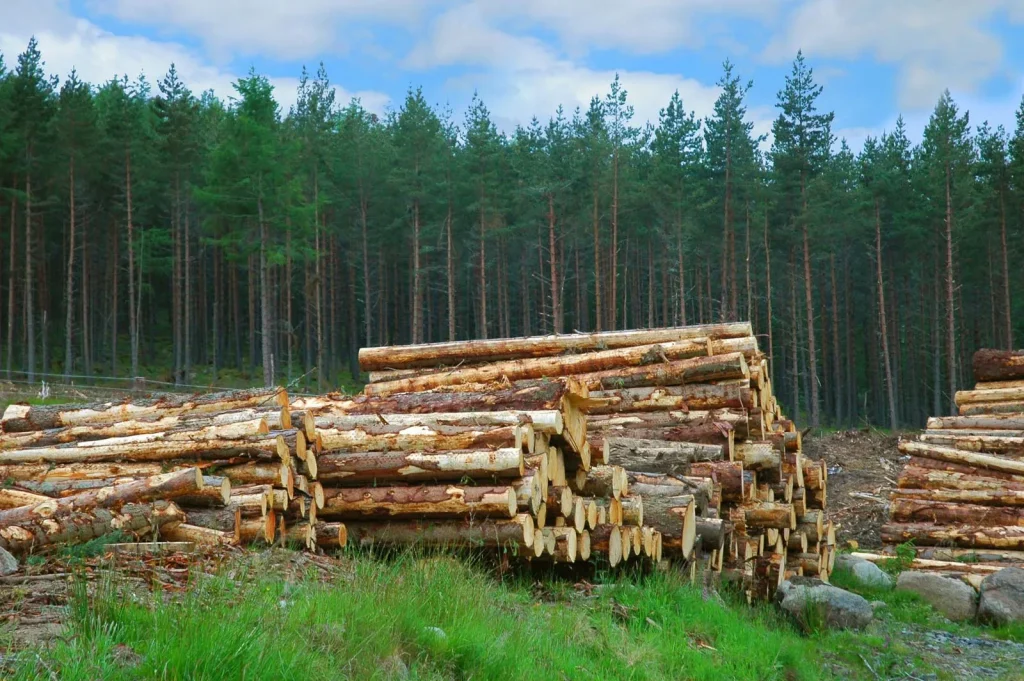
However, in Zimbabwe, this occasion is overshadowed by pressing challenges, chief among them rampant timber logging and destructive veld fires, both of which threaten the nation’s forests and the communities that depend on them.
There is also invasive destruction of forests for mining activities and agricultural production (particularly during the current tobacco curing season) which are decimating national forests at an exponential rate.
In 2011, the Forestry Commission of Zimbabwe found that the country was losing about 330,000 hectares of forest per annum and this rate keeps increasing. Forestry Commission states that between 1990 and 2000 Zimbabwe lost an average of 312,900 hectares of forest per year. This amounts to an average annual deforestation rate of 1.41 %. Further, between 2000 and 2005, the rate of forest change increased by 16.4% to 1.64% per annum.
“The direct drivers of deforestation include Firewood, settlements, agriculture, wildfire, tobacco curing, charcoal, brick making, logging, overstocking, construction, mining, and brushwood,” according to the Forestry Commission.
In recent years, the deforestation rate has shown signs of decline, but the challenge of forest loss remains a significant challenge. As of 2024, Zimbabwe’s annual deforestation rate is estimated at approximately 262,000 hectares per year.
This reduction is attributed to several factors, including reforestation initiatives, enhanced law enforcement, and increased community involvement. Notably, in 2024, there was a 25% reduction in deforested areas compared to the previous year, with satellite imagery confirming a 15% increase in forest cover in key regions.
While these developments are promising, the current deforestation rate remains problematic. Continued efforts in sustainable forest management and conservation are essential to further reduce deforestation and promote environmental sustainability in Zimbabwe.
The challenge is also regional and global with the Food and Agriculture Organization (FAO) showing that the burden lies heavy in Africa ‘rate of net forest loss declined from 7.8 million ha per year in the decade 1990–2000 to 5.2 million ha per year in 2000–2010 and 4.7 million ha per year in 2010–2020.
Africa has the largest annual rate of net forest loss in 2010–2020, at 3.9 million hectares, followed by South America at 2.6 million hectares.
FAO reports that Agriculture and infrastructure development are the most anthropogenic drivers of deforestation with forest destruction accelerating global warming leading to increased climate change risks.
FAO is conducting the Global Forest Resources Assessment (FRA) 2025, which will provide updated information on forest resources, including data on net forest loss for the period 2020–2025.
Preliminary observations suggest that while deforestation persists, the global rate of forest loss is slowing due to conservation efforts, reforestation initiatives, and sustainable forest management practices.
Zimbabwe’s vast natural landscapes cover 39 million hectares, with approximately 18 million hectares (45%) classified as forested land. These forests are more than just trees; they support biodiversity, livelihoods, water resources, soil fertility, and climate regulation.
Among them, 9.9 million hectares consist of indigenous woodlands, home to diverse plant and animal species, and communities that rely on these ecosystems for survival.
Yet, these forests face an existential crisis due to illegal logging, land encroachment, and destructive veld fires. The consequences are far-reaching: deforestation accelerates climate change, biodiversity loss, and water shortages, while veld fires destroy livelihoods, displace communities, and exacerbate poverty.
Timber harvesting, both legal and illegal, plays a significant role in Zimbabwe’s economy. The forestry sector contributes through timber production, non-timber forest products, and ecotourism. However, unsustainable logging practices threaten this economic pillar.
In Lupane, Matabeleland North province, for example, forest-dependent communities are at risk of displacement by settlers, illegal loggers, and corporations that exploit forests for commercial gain. These activities strip forests of their ability to function as carbon sinks, accelerating global climate change.
Centre for Natural Resource Governance (CNRG) work with Lupane communities has been advocating against the destruction of forests which ‘undermines food security, as many rural communities rely on them for wild fruits, honey, mushrooms, and other essential resources.’
CNRG notes with concern that the destruction caused by veld fires has severe economic implications for Zimbabwe which therefore must be avoided.
“The forestry sector contributes significantly to the country’s economy through timber production, non-timber forest resources, and tourism. With the loss of these resources, communities relying on forestry-related activities, such as logging, crafting, and ecotourism, are left stranded, leading to economic decline and unemployment,” says Ndaizivei Garura, CNRG senior programs officer.
The organisation has over the years warned that logging and wild fires pose a direct threat to the livelihoods of rural communities in Zimbabwe, who heavily depend on forests for food, pastures, firewood, and herbs, hence the need for caution in this fire season.
“With the destruction of these natural resources, communities face food insecurity, increased poverty, and an increased burden on women and children who often bear the responsibility of gathering alternative resources,” added Garura.
Zimbabwe experiences widespread wildfires annually, particularly during the dry season. These fires often result from human activities, including land clearing for agriculture, careless disposal of burning materials, and hunting practices. The impact is devastating:
• Loss of forests, grazing lands, and biodiversity
• Destruction of homes, crops, and livestock
• Increased food insecurity and poverty
• Deterioration of air quality and health hazards
Veld fires have severe economic implications, particularly for rural communities that depend on forests for firewood, pastures, medicinal plants, and food. The loss of these resources disproportionately affects women and children, who are often responsible for gathering household necessities.
To combat these challenges, Zimbabwe must prioritize forest conservation and fire prevention through, stronger law enforcement and a crackdown on illegal logging and land encroachment to protect indigenous forests.
Garura says the involvement of communities is also key in sustainable forest management and fire prevention strategies, inclusive of educating citizens on the dangers of veld fires and promoting fire safety practices.
As the world celebrates International Day of Forests 2025, Zimbabwe must confront the urgent threats of deforestation and veld fires that endanger its natural heritage. By strengthening conservation efforts, enforcing laws, and engaging communities in sustainable forest practices, the country can preserve its forests, safeguard livelihoods, and contribute to global climate action.
Forests are more than just trees—they are lifelines for people, wildlife, and the planet, a vital cog in an interdependent ecosystem. The time to act is now.