
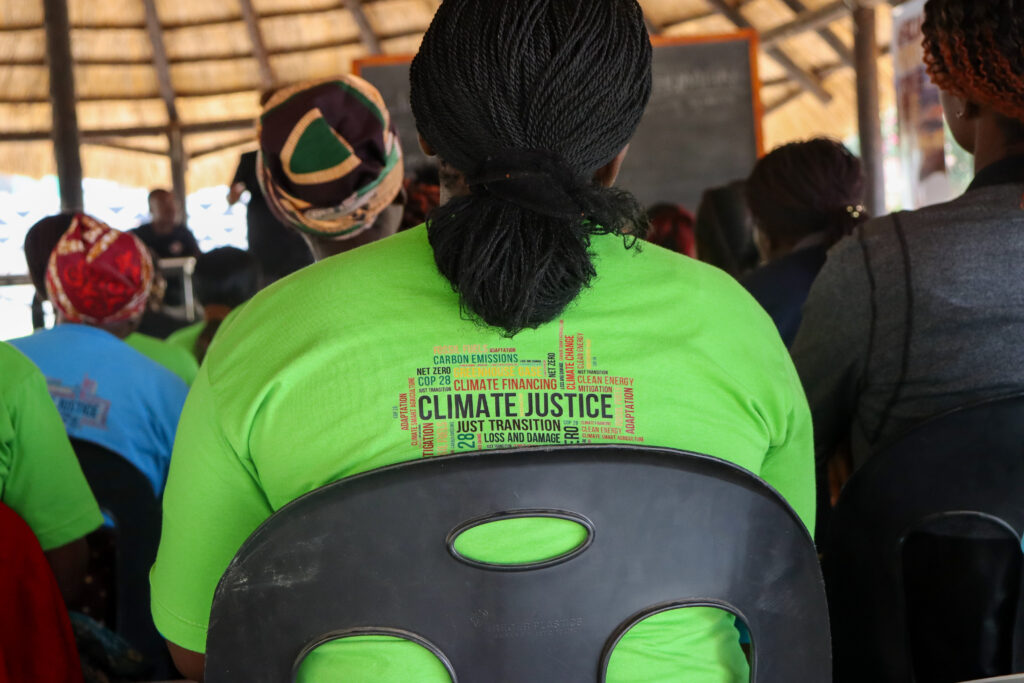
Youths in a leading civic society organization monitoring the extraction of natural resources have lamented the exploitation of Africa’s natural wealth to sustain the green energy revolution as an extension of colonization.
Speaking during a virtual discussion, Centre for Natural Resource Governance (CNRG) youth hub lead Munashe Cuthbert Masiyiwa called for extensive education of local communities to hold the government to account.
Masiyiwa a Data Scientist from the University of Zimbabwe said Green Extractives in Zimbabwe and Africa are at the center of natural resource exploitation in a quest to fight climate change.
He said young people must take up the mantle and be passionate about Pan-Africanism and the governance of finite natural resources, not just in Zimbabwe but also in Africa at large.
“There is a need to build power from below. To educate the communities to start having these discussions. Start holding the government to account.
“After benefiting from our people? They kill them. Are these the benefits of our minerals? They are not. We must start building knowledge from below, power from below but most importantly build love from below because that is the most crucial element to humanity,” he said.
Green Minerals are minerals that are crucial in the transition to a low-carbon, suitable economy i.e. a climate-friendly economy. These minerals include but are not limited to lithium, cobalt, nickel, copper, and graphite, with each of them playing a crucial role in the fight against greenhouse carbon emissions.
Masiyiwa says green minerals play a major role in curbing climate change as they are key components to technologies that are energy efficient and result in the reduction of carbon emissions.
Green Minerals are minerals that are crucial in the transition to a low-carbon, suitable economy or a climate-friendly economy. These minerals include but are not limited to lithium, cobalt, nickel, copper, and graphite, with each of them playing a crucial role in the fight against greenhouse carbon emissions.
Masiyiwa said the major goal in curbing climate change through adoption of green technologies, is the reduction of carbon (CO2) emissions and green minerals play a major role.
However, the recent appetite for transitional minerals, as green minerals are sometimes referred to, has exposed governance weaknesses in Zimbabwe, with the lithium value chain particularly susceptible to exploitation.
“There is a growing discourse in Zimbabwe about the corruption around Lithium. Lithium is one of the green minerals together with cobalt, and nickel plays a crucial role in the production of lithium-ion batteries for energy storage.
“Copper one of the green minerals is a major component in the production of solar panels, wind turbines for wind electricity, and electric grids. We do have copper here in Zimbabwe but most in the region come from Zambia in the Copperbelt province, Kansanshi, and Lumwana.
“The climate change discourse has opened new struggles for Africa. As the WEST AND THE EAST continue to work against climate change. The need for these resources increased. But can the fight continue without Africa? No, because these resources are largely found here,” he said.
He added, “The Scramble of Africa brought about the borders through colonialism with Belgium, France, Portugal, and Britain, playing a major role. A new wave of what others would want to call “neo-colonialism” has emerged through extractive capitalism which is the extraction of minerals and metals for profit or what others call surplus value., without caring about the environment and the community these minerals spring from.”
Professor Patrick Bond, Sociology Director of the Centre for Social Change University of Johannesburg, calls for inter-generational justice as the current state of wealth depletion hurts future generations.
In a presentation titled Resource extraction cost-benefit debates in Zimbabwe: The environmental economics of lithium extraction, Prof Bond calls for a balance in meeting contemporary and future needs.
Most countries, it says, start with a relatively high dependence on natural capital, and those that progress most successfully manage their assets for the long-term reinvestment in human and social capital, and build strong institutions and governance systems.
In this discourse, equity for a bludgeoning youth demographic dividend rises to the fore, demanding greater representation of the younger generation in the Global South’s natural resource extraction value chain.
“Sustainable development is a development that meets the needs of the present without compromising the ability of future generations to meet their own needs. [Current generations] draw too heavily, too quickly, on already overdrawn environmental resource accounts to be affordable far into the future without bankrupting those accounts.
“They may show a profit on the balance sheets of our generation, but our children will inherit the losses. We borrow environmental capital from future generations with no intention or prospect of repaying,” says Prof Bond.
By including youth in natural resource governance, we can ensure that decisions balance current needs with long-term sustainability, promoting intergenerational equity and a more secure future.
Young people will inherit the consequences of current decisions on natural resource management, making them vital stakeholders in the process. Decisions consider long-term implications and are tailored to align with the principle of intergenerational equity.