
Staff Reporter
Hwange communities supported by the Centre for Natural Resource Governance (CNRG) have found a local solution to curb human conflict with elephants in hot spot areas like Mabale, Nabushome, Nengasha as well as Chilanga by discovering powders that scare away the wild animals from farms and homesteads.
According to statistics provided by the National Parks and Wildlife Department this year, at least 15 people were killed by elephants and other wild animals in the first quarter of 2023 as cases of human-wildlife conflicts continued to rise in Hwange, Matabeleland North province.
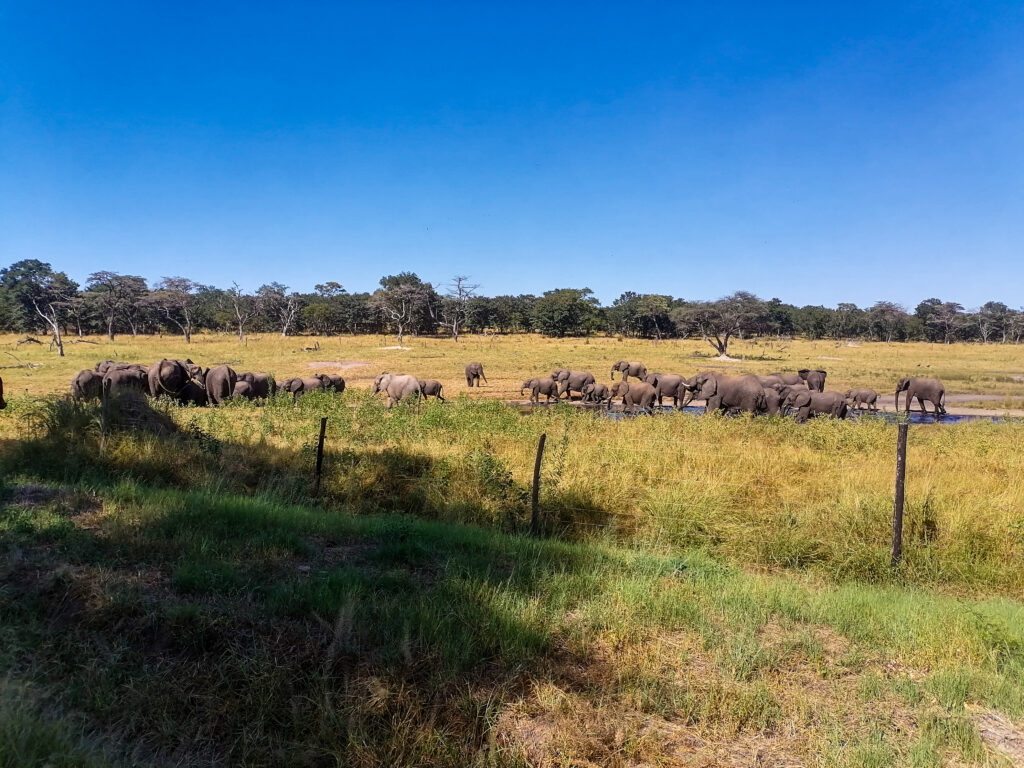
In Hwange, a ballooning elephant population was blamed for most of the conflicts coupled with the expansion of human settlements in areas going into wildlife habitats.
Again, an international ban on the trade in wildlife products and species is blamed for an increase in the elephant population in Hwange.
It is therefore against this background that CNRG has played a role in the initiative of discovering powders that scare away elephants from areas around human settlements in Hwange.
In an interview with this publication, Ndaizivei Garura, the CNRG Project Officer for Matebeleland, confirmed the development and revealed that the organisation has since joined hands with a community-based organisation in Hwange called Tikobane Trust to invoke indigenous knowledge science to address human wildlife conflict.
“CNRG has raised awareness on human-wildlife conflict and has created engagement platforms between villagers and stakeholders such as National parks. It was during this multi-stakeholder platform that an initiative was made to find ways of combating these challenges. Tikobane Trust was one of the key stakeholders that works with CNRG in awareness raising,” she said.
Garura also highlighted that there are more efforts that have been made by CNRG to combat the problem of elephants in Hwange.
“CNRG mobilised community researchers to collect data on the impacts of human-wildlife conflict in Mabale and Nabushome. The research informed advocacy work towards policy formulation at the National level like the policy on compensation for human-wildlife conflict victims which is now being worked on by the National Parks,” she said.
Asked whether there is a continuous and sustainable arrangement that has been put in Hwange to effectively deal with the problem of human-wildlife conflict, Garura said more can be done if conservationist organisations can support the existing efforts by CNRG.
She added:
“Through collaborations with community CBOs like Tikobane Trust and Shangano Arts who do awareness-raising festivals, we have been trying to effectively curb the problem of elephants and other wildlife in terms of conflicts with people in Hwange. We have partners supporting our work already. However, more can be done if we get additional support from other developmental partners to complement our work,” she said. ‘We strongly believe humans and wildlife can coexist and that wildlife is a heritage worth preserving, hence all efforts to ensure non-violent approaches to de-escalate HWC,’ she added.
The Hwange National Park is the biggest wildlife reserve in the country.
Stretching over 14 600 square km and in a low rainfall area, it is home to more than 100 mammal and 400 bird species.
During the dry season, the competition for food and water intensifies, resulting in conflicts among the animals.